The Heliades (ancient Greek: Ἡλιάδες) in ancient Greek mythology were the daughters of Helios and Clymene, and the sisters of Phaeton (or their earthly father was Merops, and their heavenly father was Helios). Despite their father’s prohibition, they harnessed horses for Phaeton.
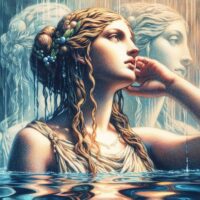
After the death of their brother, they were transformed into poplars, and their tears turned into amber.
According to Gaius Julius Hyginus, there were seven Heliades: Meropa, Helia, Egle, Lampetia, Phoebe, Aetheria, and Dioxyppa.
Ovid mentions three: Phaethusa, Lampetia, and the third unnamed. Heraclitus the Paradoxographer lists three as well: Phoebe, Lampeto, and Egle. They formed a chorus in Aeschylus’ tragedy “Heliades” (fr. 69—72 Radt). Euripides also mentions them.
According to one interpretation, they threw themselves into the river Eridanus, and people who came later saw three poplars. According to Diodorus Siculus, the Heliades were the children of Helios and Rhode: seven sons—Ochimus, Cercaphus, Tenages, Actis, Triopas, Macareus, and Candal, and one daughter—Electrona, who lived on the island of Rhodes.
When the Heliades came of age, Helios informed them that the goddess Athena would be with those who first offered her a sacrifice. The same announcement was made to the residents of Attica.

The Heliades made sacrifices but forgot to light the fire in haste, and at that time, Cecrops, the ruler of Athens, performed a sacrifice according to all the rules—with a lit fire, but later than the brothers. Therefore, a special ritual of sacrifices was established in Rhodes, and the goddess settled on the island.
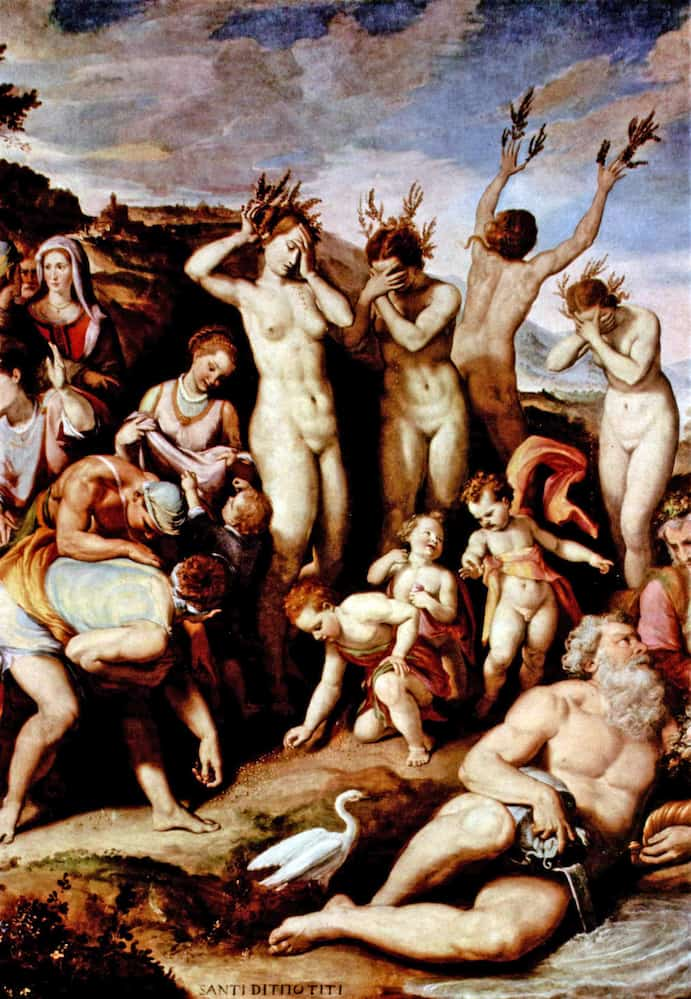
The brothers surpassed all others in various sciences, especially in astrology. They made many discoveries in the field of navigation and also divided time into hours. Tenages was the most gifted among them, for which he was killed by his four brothers out of envy. After the crime was revealed, the guilty fled from Rhodes: Macarius to Lesbos, Candal to Cos, Triopas to Caria, and Actis to Egypt, where he founded the city of Heliopolis, named after his father. Ochimus and Cercaphus did not participate in the murder, so they remained on Rhodes.
In Parmenides’ poem, the Heliades, virgins, led him from darkness to light, to the goddess Dike (Justice).
Names of the Heliades
- Aretusa
- Asteria. Wife of Gidaspus, mother of Deriadas
- Helia
- Dioxyppa
- Lampetia (Lampeto) “shining.” Daughter of Helios and Neaera, she tended to cattle. Transformed into a poplar mourning for Phaeton. In Fulgentius’ Lampefusa.
- Meropa. Heliad
- Phoebe. Transformed into a poplar
- Egailea
- Egla
- Aetheria (Epheria)
Heliades in Astronomy
In honor of Asteria, an asteroid (658) Asteria was named, discovered in 1908.
Mythology
Aeschylus is the oldest author of a work concerning them (The Heliades), unfortunately, only fragments have come down to us; in it, three of the sisters (Lampetia, Phaethusa, and Egle) watched in despair the tragedy of Phaeton. The brother, disobeying their father Helios, attempted to drive the Sun’s chariot across the sky, but inexperienced, he could not control the Horses of the Sun and approached the Earth too closely, causing drought and earning the wrath and punishment by Zeus, who with a lightning bolt cast him into the river Eridanus, where he drowned.
The three sisters were so torn apart by incessant grief that Zeus transformed them into poplars, trees from which it was believed their tears seeped in the form of amber. Aeschylus wrote that the place of Phaeton’s fall was Iberia.