When and where did Santa Claus first appear in history? Perhaps one of the most endearing fabrications ever created is the character of Santa Claus. He travels great distances to deliver gifts to millions upon millions of homes throughout the world all at once, just in time for Christmas. But, that’s not how the actual world works. Putting aside an adult’s rationale, this picture does make sense for kids who peek out of keyholes on Christmas Eve, giddy with excitement and amazement at the prospect of seeing the mysterious gift-giver in person. But also for those who don’t actually believe in him. Let’s see how.
The modern conception of Santa Claus was actually created by a Union propaganda cartoonist during the American Civil War.
Santa Claus and the materialism
Despite the annual focus on materialism, there is more to the story of Santa Claus than meets the eye. His representation echoes a centuries-old custom that has a direct connection to generosity. There can’t be anything wrong with Santa Claus to start with since giving is caring, right?
However, criticism of the excesses of the holiday and of Santa Claus as a symbol of it has become as firmly associated with the fat, old, friendly man as his white ruffled beard, bushy eyebrows, red robe, and fur-trimmed cap. In some places, chocolate Santas appear on the shelves already in late summer.

Did Coca-Cola invent Santa Claus?
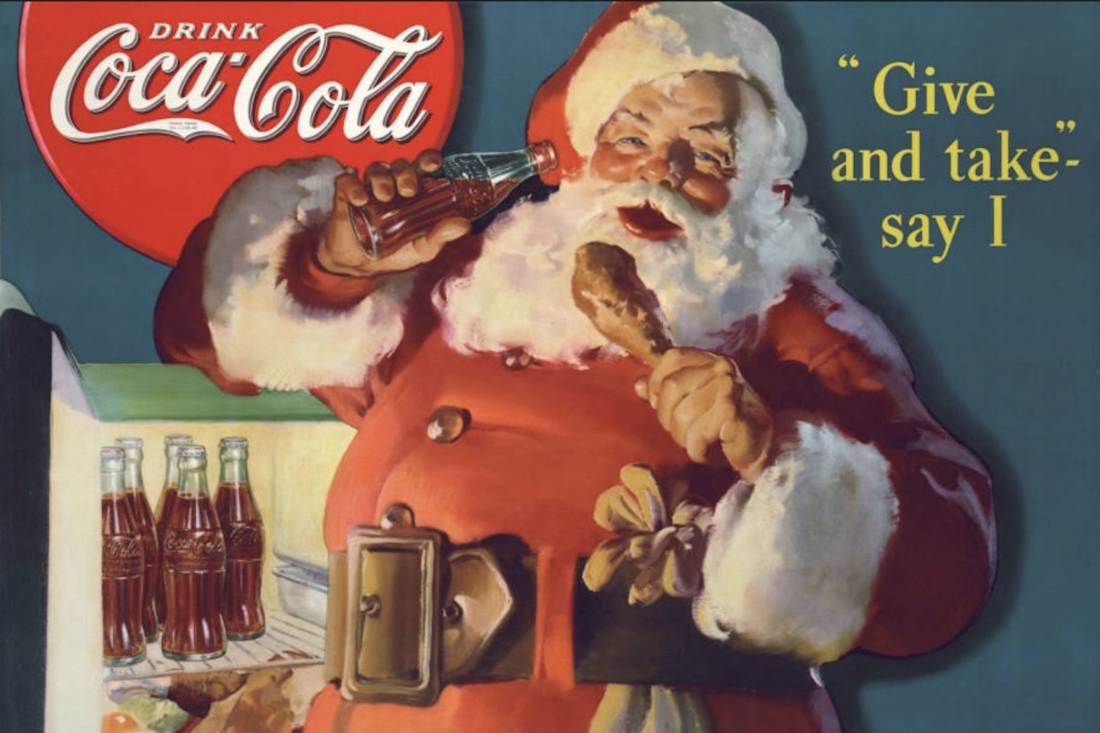
That pretty much sums up what Santa is like these days. Something that the soft drink manufacturer Coca-Cola had a hand in creating and popularizing. Effervescent specialists chose the round, vulnerable man as the face of a successful advertising campaign in 1931, when the globe had not yet recovered from the greatest economic crisis in history. However, Coca-Cola is not responsible for the existence of Santa Claus.
Who was the original Santa Claus?
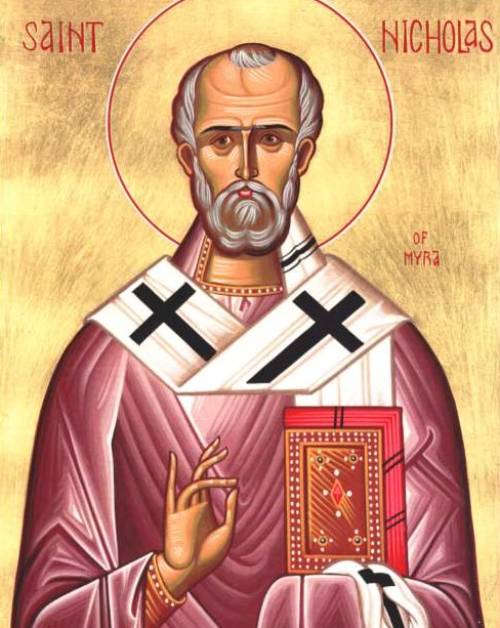
Instead, Saint Nicholas is where Santa Claus gets his inspiration from. Since the 14th century, the 6th of December has been a day of gift-giving in honor of Saint Nicholas. However, why him specifically? As a personification, St. Nicholas combines the characteristics of two different historical figures.
One such person is Bishop Nicholas of Myra, who served in the 3rd century in what is now Turkey. Nicholas of Sion, a historical figure from the 6th century who lived in an area close to Myra, is also included in the legend.
Stories told about the two men’s lives merged to become the legendary character of Saint Nicholas of Myra, who, according to the legends, worked many miracles. Some of his miracles include calming a storm, reviving the dead, and rescuing three young ladies from a life of prostitution by sneaking gold into their father’s house at night. The legend of the selfless benefactor and guardian, Santa Claus, who visited unobserved youngsters at night to provide presents, was formed from this act of kindness.

Luther establishes his Christ Child
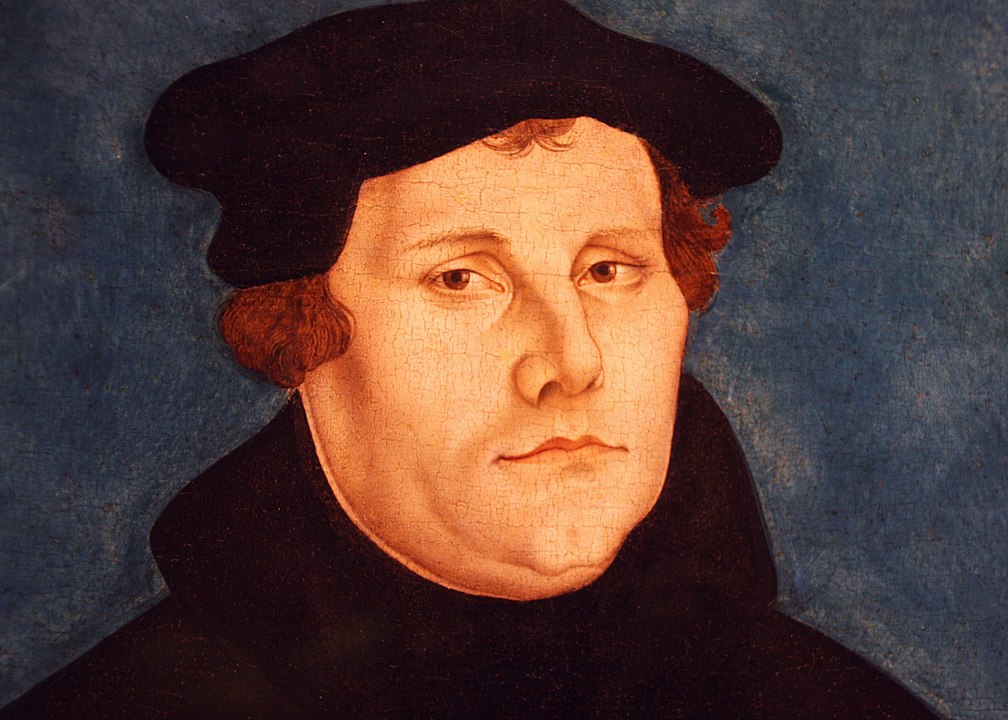
But then the reformer Martin Luther came along, and he had a low opinion about paying tribute to the dead. He advocated turning attention away from cults of personality and onto God and Jesus. Even now, people celebrate St. Nicholas Day on December 6. In the Netherlands, they call him “Sinterklaas,” which is said to be the original name of “Santa Claus”.
It wasn’t until the Reformation of the 16th century that the great gift-giver was destined to be transformed into someone else. As early as 1530, Luther separated bishops from the role of “Holy Christian” of St. Nicholas and made him only the “giver of gifts.” Luther’s goals were fulfilled when the custom of exchanging presents shifted from the first of the month to Christmas, the later of the month.
Historians disagree on whether the “Holy Christ” was meant to represent a young version of Jesus or an angel-like being. But at that point, he had become the Christ Child after all these years. He was known to be shown with white robes and wings sometimes.
When did modern Santa Claus first appear?
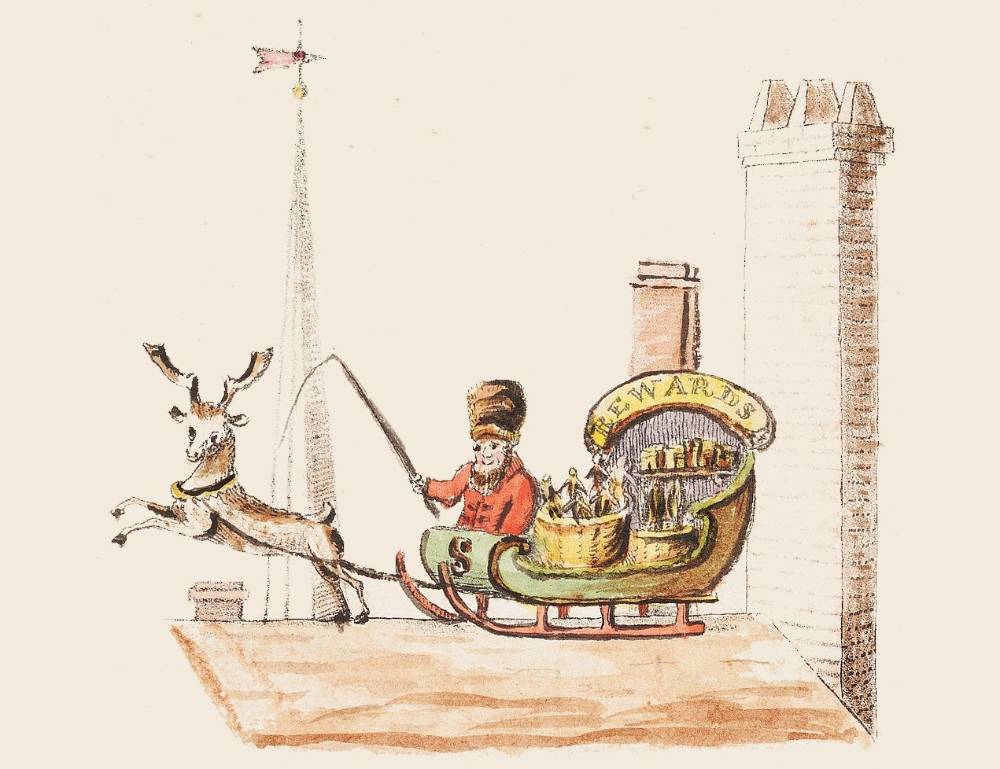
Family gift-giving at Christmas has been a popular tradition through the years and decades, and it has also served as a teaching instrument: it is always the good people who receive presents. Santa Claus is a composite character, the result of a variety of traditions that grew more secular as the 19th century progressed and distanced themselves from the Christ Child and the original Saint Nicholas.
An anonymous artist in 1821 created eight illustrations for the poem “Old Santeclaus with Much Delight,” which depicted, among other things, a man in a scarlet coat riding a reindeer sled for the first time in history. It’s the earliest written account of Santa Claus’s arrival on Christmas Eve and the first time his reindeer or sleigh are mentioned (let alone depicted). The artworks included with this poem are the first ever portrayals of Santa Claus to be published in print.
A tiny booklet titled “The Children’s Friend: A New-Year’s Present, to the Little Ones from Five to Twelve,” by American poet William B. Gilley was also released in 1821.
The American writer Clement Clarke Moore’s “The Night Before Christmas,” written two years later in 1823, is famed for its description of a bearded Santa Claus. When Christmas finally arrives, the gifts follow, and this long tradition is described in a poem by German poet August Fallersleben, “Tomorrow Comes Santa Claus,” in 1835. His Santa Claus brought the children sabers, rifles, and flags, which could be handy in a time stuck between the July Revolution (1830) and the German Revolution (1848).
The man behind the modern version of Santa Claus
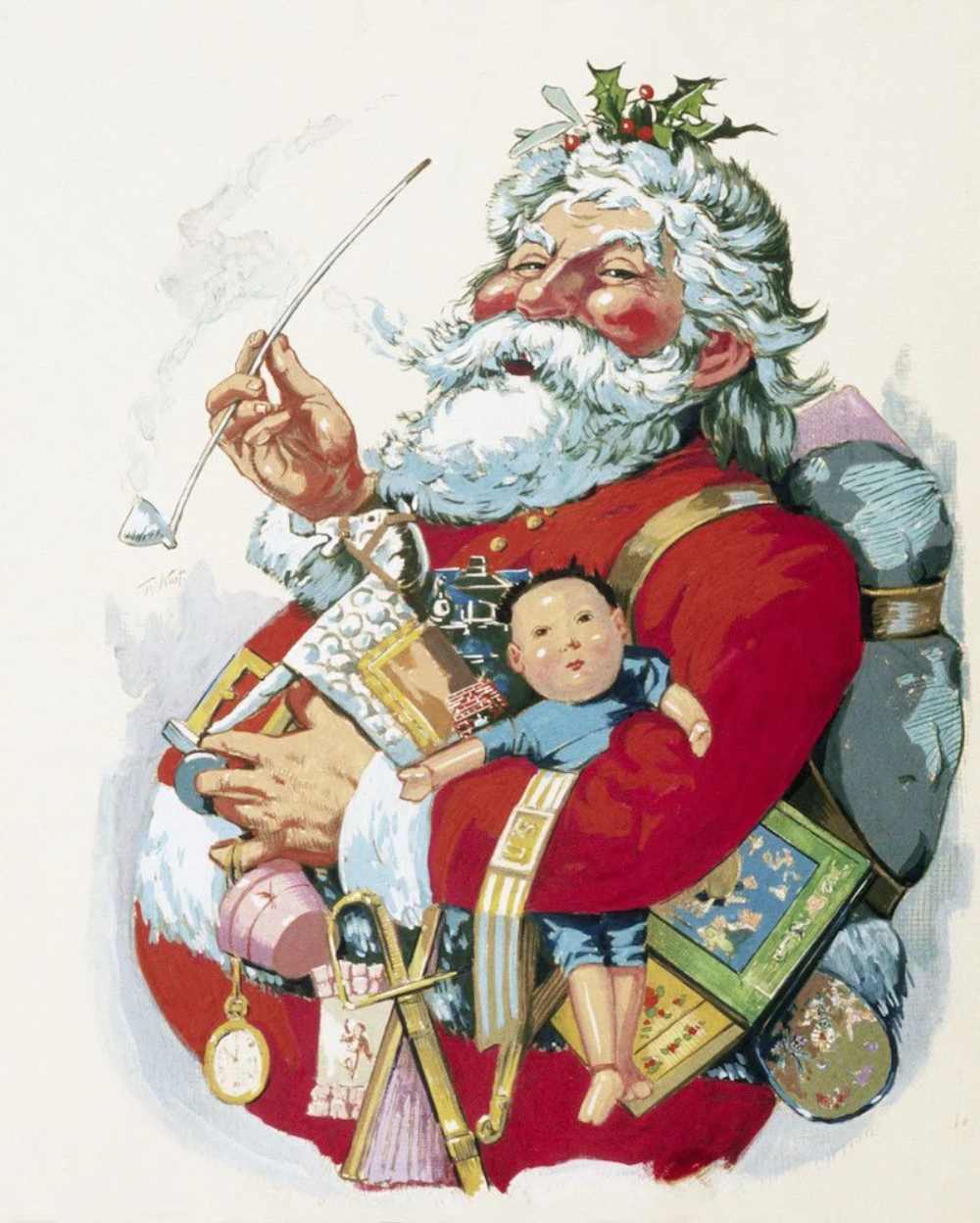
At the end of the 19th century, newspapers and Heinrich Hoffmann’s “Struwwelpeter” children’s book both included additional passages and caricatures of Santa Claus. After a while, the big man stopped wearing his St. Nicholas bishop’s robes, miters, and crozier and instead switched to a cloak and pointed cap for the first time.
Luther’s reformation did at least relegate St. Nicholas to obscurity, and now Nicholas was morphing into Santa Claus. The cartoonist Thomas Nast, who settled in the United States after migrating from Germany in 1862, similarly depicted a plump, bearded man bringing gifts to Union troops stationed up north. Santa Claus had been portrayed in the art for decades with a striking resemblance to the modern-day version after that.
The modern conception of Santa Claus was actually created by a Union propaganda cartoonist during the American Civil War.
The evolution of gift-giving
Gift-giving has evolved from an act of unilateral giving to one of mutual “gratification” since the 1931 Coca-Cola commercial, which depicted Santa Claus on billboards for the first time throughout the globe. There are no examples of a gift exchange in the Christmas spirit as we understand it in the Bible.
Consequently, particularly in the first centuries of the Christian era, giving had to be viewed more as actual support for survival than as an expression of individual love, the enhancement of pleasure in life, or the hope for a happy union. Therefore, there was less of a symbiotic gift exchange in the origin of Christmas and also Santa Claus.
Compared to Santa Claus, the gifts of the Magi (the “Three Wise Men“) at Christ’s birth can be seen more as a one-way exchange as their offerings recognized Jesus’ holy status at his birth.
Many people find it difficult to express such personalized love via Christmas presents. It’s not always simple to provide a gift that both pleases and delights the recipient, as well as meets their reasonable expectations. Equally ambiguous is the appropriate response to a gift that may not be to one’s liking. There’s always the option of putting the blame on Santa Claus. That’s essentially his job description as well.
Bibliography
- Jean Blacker; Glyn S. Burgess; Amy V. Ogden, 2013, “The Life of St Nicholas: Introduction”.
- Gerry Bowler, 2005. Santa Claus: a biography. McClelland & Stewart Ltd. ISBN 978-0-7710-1668-4.
- George Ferguson, 1976, “St. Nicholas of Myra or Bari”, Signs and Symbols in Christian Art, Oxford University Press.
- Jeremy Seal, 2005, Nicholas: The Epic Journey from Saint to Santa Claus.