When water freezes, it expands to take up more space than it does when it is a liquid. This phenomenon can be seen in a variety of situations, including broken bottles in the freezer and damage caused by frost on the road. The vast majority of liquids and gases, on the other hand, shrink as their temperature drops. Why, of all things, does water act in such a peculiar manner?
When heated, most substances undergo expansion, and when cooled, they undergo contraction. This effect is most noticeable in the case of gases, although it is also present in liquids and solids. An excellent illustration of this phenomenon is what happens to the volume of air inside a balloon when it is placed near an open window or near a heater that is cranked up to its maximum.
There Must Be Room for Molecules
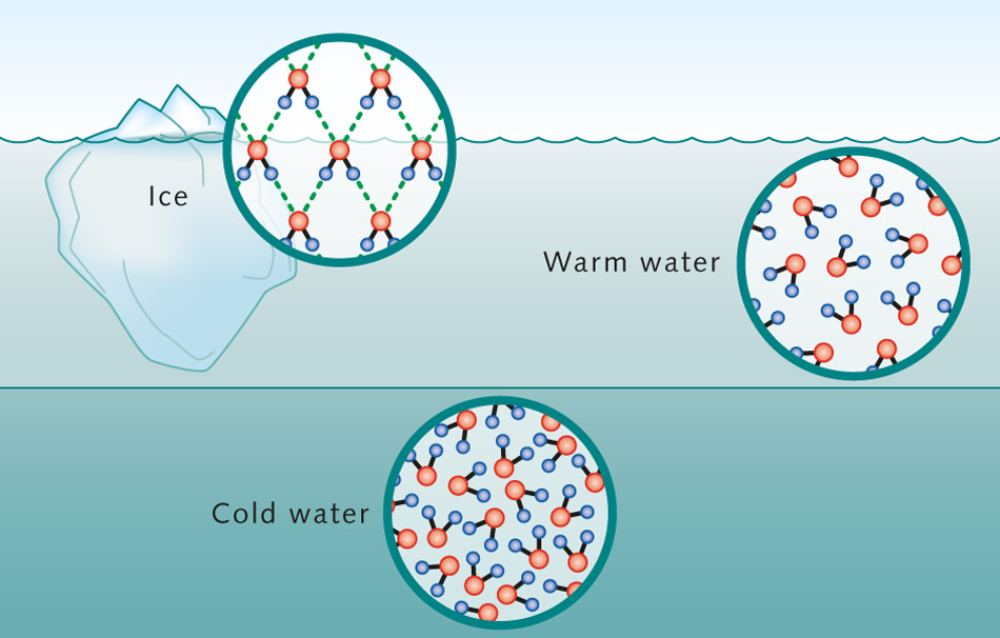
The motion of the molecules in a body or gas quickens in proportion to the amount of heat or energy that is applied to it; in other words, the more energy that is given, the warmer the body or gas gets. As a consequence of this, they come into contact with one another considerably more often and violently, as well as requiring more space; so, the amount of pressure that gas molecules exert on the envelope of a balloon, for example, rises. The material will expand as a result of the necessity for a bigger volume in order to maintain the same pressure.
Water, on the other hand, acts in a distinct way. If you cool it down, the volume will reduce to a temperature of around 39 degrees Fahrenheit or 4 degrees Celsius. This is still very much in line with what one could anticipate. However, as the temperature drops below that point, the water begins to expand again. Because of this, water’s density is at its greatest at roughly 39 degrees Fahrenheit (4 degrees Celsius). This is called the density anomaly of water.

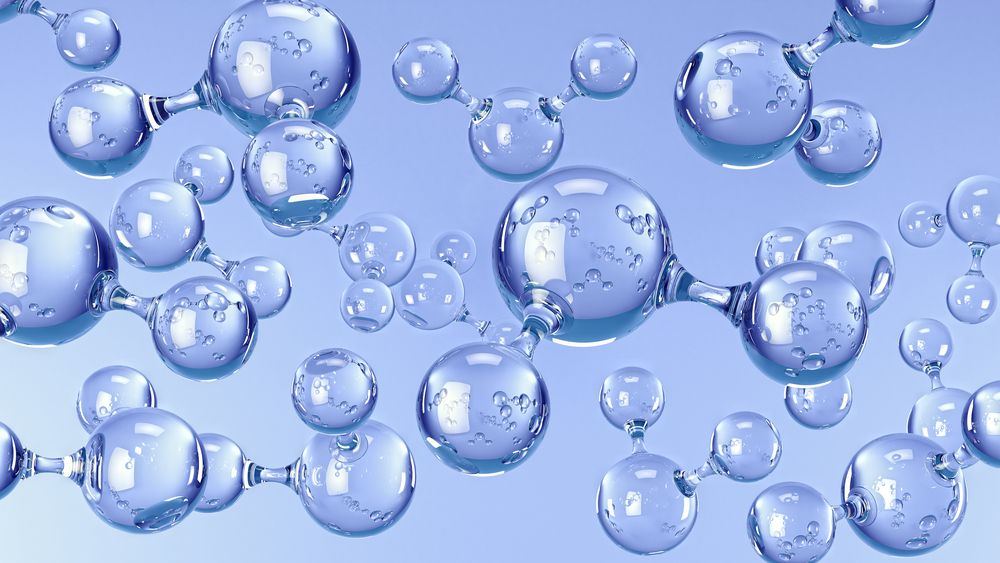
But where does this seemingly impossible occurrence come from? Once again, the molecules are in charge. Because a molecule of water is made up of two hydrogen atoms and one oxygen atom, its chemical formula is H2O. The electrons that make up the water molecule are attracted to these atoms to varying degrees.
As a consequence of this, the center of charge of the hydrogen becomes slightly positive, while the center of charge of the oxygen becomes negatively charged. When two water molecules come into contact with one another, the hydrogen atoms of one molecule get attracted to the oxygen atoms of the other molecule and align themselves there. This results in the formation of what are known as hydrogen bonds.
This Feature of Water Is Life-Sustaining
There are still regions in liquid water where the molecules are regularly aligned with each other, similar to the way that they are in ice crystals, since these areas allow for these regions to exist in liquid water. These so-called clusters do not have the same degree of rigidity as those in a solid crystal. They undergo quite rapid transformations, particularly when subjected to higher temperatures.
If the water is allowed to cool, however, more and more clusters will develop, and they will also persist for a longer time. However, they need an ever-increasing amount of space. When the temperature drops below 39° Fahrenheit or 4° Celsius, the water will start to expand once again. When the temperature drops below 32°F or 0°C, the molecules that are the building blocks of crystals take control, and the water freezes.
This particular feature of water is critical, even life-sustaining, for a great number of natural processes, including the following. Ice floats on top of cold water due to the fact that it has a lower density than water. Because of this, bodies of water freeze from the top down, with the water that is the densest and coldest (39°F / 4°C) gathering at the bottom.
Even though it is winter, the fish and other aquatic animals that live in the garden pond do not freeze because there is always a little amount of liquid water that remains at a temperature that is comfortable for them at the bottom of the pond.