It took more than 1,000 years for mankind to understand that the human body gets sick in the absence of any vital components, such as vitamins. Since ancient times, people have known about vitamin deficiency diseases like scurvy, beriberi, pellagra, pernicious anemia, and rickets. In some cases, they also knew that certain foods were good for their health.
However, until the 20th century, the fact that the absence of certain chemicals in the body could lead to illnesses was always overlooked by physicians. Then, even the most common diseases became preventable and treatable with the isolation of vitamins and the determination and synthesis of their chemical structures. It is thought that between 1600 and 1800, scurvy killed about one million European sailors.
What is a vitamin?
A vitamin is a chemical found in our foods that is essential for good health and the continuation of life. A chemical that is a vitamin for some living species may not be a vitamin for others because they might already be able to synthesize this chemical in their bodies. We named these types of chemicals with the words “vital” and “amine” in the early days. “Vita” means “life” in Latin, and the suffix “-amine” means the same organic compounds. Because at that time, all vitamins were thought to be nitrogenous compounds derived from amine or ammonia (NH3). Even after it was realized that vitamins could not be derived solely from amines, the term was so widely used that only the letter “e” was dropped.
13 essential vitamins
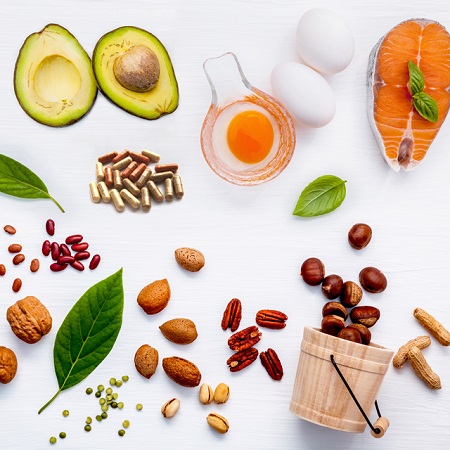
Vitamins consist of a total of 13 varieties, divided into two groups: four fat-soluble (A, D, E, and K) and nine water-soluble (eight B and one vitamin C). Since fat-soluble vitamins can be stored in the body, there is no need to take them every day. These vitamins can be harmful to the body if they are stored in excess. Water-soluble vitamins other than B12 and folic acid are not stored in the body, so they should be taken daily to maintain a healthy body. An excess of these vitamins is easily excreted from the body.

Vitamin D and Niacin
Vitamins are vital substances that the body cannot synthesize by itself. In a broader sense, we have to take all the vitamins from outside sources. If a molecule is synthesized in the body, it is not called a vitamin. But vitamin D, which is synthesized under the skin when exposed to sunlight, and niacin (B3), which is highly synthesized by the liver to prevent any damage to the body when they are deficient, are two exceptional vitamins that do not comply with this rule.
Vitamin C deficiency and scurvy
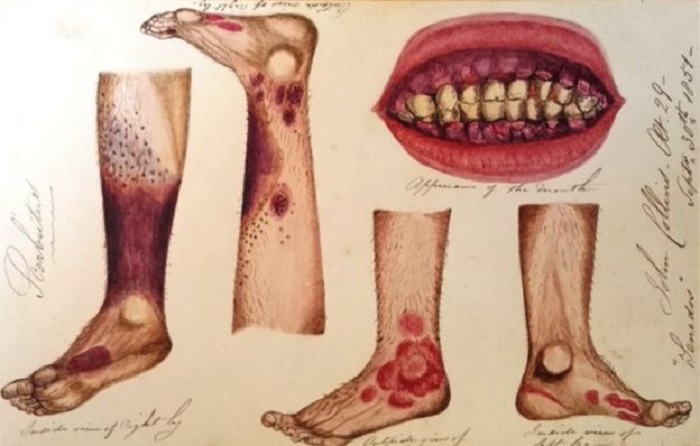
Scurvy disease (vitamin C deficiency) was first seen in Egypt in the 1500s BC, especially in winter when fresh fruits and vegetables were not available. Hippocrates described this disease in the 5th century BC as easily associated with bleeding gums, late healing of wounds, and death. The scurvy disease was mentioned in many historical events, including the Crusades. It was known for being deadly, especially during the Age of Exploration, when people went on long sea trips.
Christopher Columbus and his crew left the dying Portuguese crew on an island but saw them recover once they returned. They named this island Curacao (meaning, healing), which had all kinds of fruits and vegetables. In the past, when there wasn’t much food available on long sea trips, these ships were like medical laboratories where the different effects of not eating enough could be studied.
The arrogance, and pride
There was a method of treatment developed by the Native Americans for scurvy. They used a kind of tea that they obtained from the bark and the leaves of the pine tree as medicine. French explorer Jacques Cartier brought this tea to France in 1536. He had lost 25 crew members before the locals notified him of this medicine. However, the remedy has not been accepted by physicians for a long time. Because they were not accustomed to learning anything from people, they saw it as wild and unbelievably strange. Because humans are so closed off, arrogant, prejudiced, and proud, many medical advances have been made too late.

Lemon juice as a remedy aganist scurvy

Traveling to the South Pacific in 1593, Richard Hawkins said, “the results of all my experiments was, that oranges and lemons were the most effectual remedies for this distemper at sea,” which suggested the fruits as a method of treatment for scurvy. James Lancaster was the captain of a ship in a naval fleet in 1601. He started his journey in late April and reached his destination in September. The Lancaster crew stayed healthy and vigorous throughout the voyage. However, when Lancaster’s ship reached the port along with other ships, they quickly started to help sick seafarers. Lancaster stated in his report to the navy that he brought bottles of lemon juice to the ship before going on the voyage and that his seafarers drank three tablespoons of this lemon juice every morning.
The use of the juice of lemons is a precious medicine; the use whereof is: It is to be taken each morning, two or three spoonfuls, and fast after it two hours. Some chirurgeon also gives this juice daily to the men in health as a preservative.
A solution for the scurvy disease in John Woodall’s book The Surgeon’s Mate, published in 1636.
The discovery of vitamin C
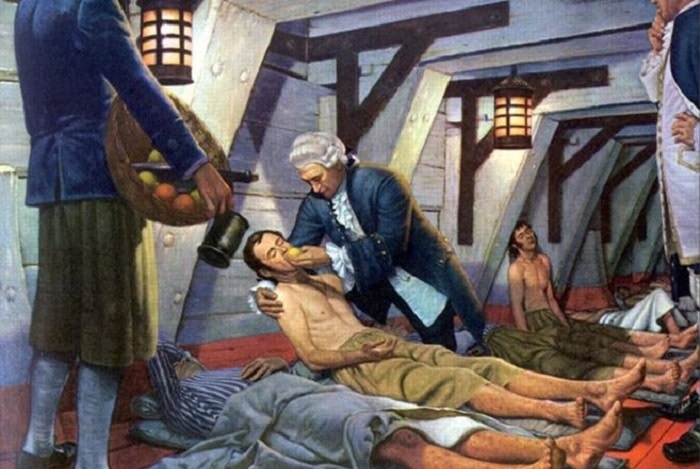
In 1747, Scottish physician James Lind, who was traveling on the ship Salisbury, had important experiences regarding scurvy patients. He ensured a balanced diet for these patients and, as a result, observed that patients who consumed oranges and lemons simultaneously recovered.
Despite all these developments, the British Navy never recommended bringing lemon juice on ships until 1770. When the colonies rebelled, lemon was fed to the naval forces to keep the soldiers vigorous and healthy to fight them, and when the fruit didn’t present during the season, they made Indian tea from the bark and leaves of the pine trees.
By 1911, the effect of anti-scurvy vitamins (otherwise known as vitamin C) was widely accepted. The supplement was named “ascorbic acid” because it was used as an ascorbic. Thus, it was the third vitamin ever discovered. In 1928, Albert Szent-Gyorgyi isolated this substance (C6 H8 O6).
Misdiagnoses
But in the early 20th century, the germ theory of diseases was such a constant idea that the bacteria or toxins were thought to be the causes of diseases such as beriberi (thiamine/vitamin B1 deficiency) and pellagra (niacin deficiency). Therefore, all the research conducted on beriberi and pellagra was full of medical failures, and the government was not interested in this issue at all. These diseases were treated similarly to the current Gulf War Syndrome. The misdiagnoses of these two diseases as microbial diseases emphasize the importance of controlled experiments, scientific methods, and the responsibility of Apollo and its predecessors in the medical world. The responsibility for compassion and honesty is the most important of all.
As a result of all these developments, the vitamin and supplementary food industry grew rapidly in the second half of the 20th century. The mystery and trustworthiness of vitamins have also brought opportunities for fraudsters and charlatans who want to make money on them. In addition to their prescription use, vitamins are used as immune boosters in the treatment of all kinds of diseases.