What were Nicolas Fouquet’s main achievements as superintendent of finances?
As superintendent of finances, Nicolas Fouquet implemented several reforms that helped to modernize and centralize the French economy. He established a system of tax collection and introduced measures to regulate public spending. He also oversaw the construction of several public works projects, including canals and fortifications.
How did Nicolas Fouquet’s patronage of the arts and architecture influence the cultural life of France?
Nicolas Fouquet was a major patron of the arts and architecture, commissioning works by some of the most celebrated artists of his time. He was especially associated with the development of the classical French style, which was characterized by simplicity, order, and symmetry. His support for the arts helped to promote French cultural identity and establish the country’s reputation as a center of artistic excellence.
What were the circumstances of Nicolas Fouquet’s arrest and trial?
Nicolas Fouquet’s arrest and trial were triggered by his lavish spending on the Château de Vaux-le-Vicomte, which was seen as a challenge to the authority of King Louis XIV. Although there is little evidence to support the charges of embezzlement that were brought against him, Fouquet was found guilty and sentenced to life imprisonment. He spent the rest of his life in prison, where he wrote poetry and continued to receive visitors and correspondence.
How did Nicolas Fouquet’s downfall reflect the political and social tensions of the 17th century?
Nicolas Fouquet’s downfall reflected the political and social tensions of the 17th century, which were characterized by a struggle for power between the monarchy and the nobility. Fouquet was seen as a representative of the old nobility, which was perceived as a threat to the authority of the king. His trial was also influenced by religious and philosophical debates, as he was associated with the libertine movement, which advocated for individual freedom and artistic expression.
What was Nicolas Fouquet’s legacy in French cultural and political history?
Nicolas Fouquet’s legacy in French cultural and political history is complex and contested. On the one hand, he is remembered as a symbol of the excess and corruption of the old regime, whose downfall helped to consolidate the power of King Louis XIV. On the other hand, he is celebrated as a patron of the arts and architecture, whose vision and taste helped to shape the cultural identity of France. His life and career continue to inspire debate and discussion among historians and cultural critics.
What was the significance of the famous u0022Fête des Vauxu0022 held by Nicolas Fouquet in 1661, and how did it contribute to his downfall?
The u0022Fête des Vauxu0022 was a lavish party held by Nicolas Fouquet at his estate in Vaux-le-Vicomte in 1661. The party was attended by many members of the French court, and was widely seen as a display of Fouquet’s wealth and power. However, the party also drew the attention of King Louis XIV, who was jealous of Fouquet’s success and began to investigate his finances. This eventually led to Fouquet’s arrest and imprisonment.
The French politician Nicolas Fouquet (1615–1680) was born into a rich bourgeois family, and his father had become a nobleman with the acquisition of a government post. Cardinal Mazarin, the Chief Minister, named Nicolas Fouquet Superintendent of Finance on February 7, 1653. A few years after reaching the pinnacle of his success, he dramatically fell from grace due to his involvement with personal gain.
- What were Nicolas Fouquet’s main achievements as superintendent of finances?
- How did Nicolas Fouquet’s patronage of the arts and architecture influence the cultural life of France?
- What were the circumstances of Nicolas Fouquet’s arrest and trial?
- How did Nicolas Fouquet’s downfall reflect the political and social tensions of the 17th century?
- What was Nicolas Fouquet’s legacy in French cultural and political history?
- What was the significance of the famous u0022Fête des Vauxu0022 held by Nicolas Fouquet in 1661, and how did it contribute to his downfall?
- To what heights can I not rise?
- The Design of Versailles Was Inspired by His Chateau, Vaux-Le-Vicomte
- Ambitions of Becoming a Chief Minister
- The Danger of Wild Animals
- A Protracted Trial That Was More Political Than Legal
- The Lavish Celebration of August 17, 1661: The Fallacy of Grandeur
Nicolas Fouquet, born in 1615, was originally intended for the church, but he rebelled and chose another route. His father gave in and secured him a seat as a counselor in the Parliament of Metz. When he was sixteen, this was his first job. Then, in 1636, he obtained one of the Master of Requests positions, which were established to raise money for the war that had been proclaimed against Spain. Given that he wasn’t 32 years old yet, Nicolas Fouquet was granted an exemption. Four years later, in 1641, he graduated with a law degree.
Nicolas Fouquet had a quick career: in 1642, he became intendant of justice, police, and finances in the army of Marshal de Châtillon in Flanders; in 1644, intendant of justice, police, and finances in Dauphiné; three years later, intendant in the army of Picardy; in 1648, intendant of the generality of Paris; and in 1650, at the age of thirty-five, he bought the office of attorney general of the Parliament, which he sold in August 1661, on the sneaky advice of Jean-Baptiste Colbert, a trusted man of Jules Mazarin, who was brought to the service of King Louis XIV after Mazarin’s death. So, after that Fouquet was no longer the subject of the Parliament.
To what heights can I not rise?
The Fouquet family motto was “Quo non ascendet?” (To what heights can I not rise?) and in 1653, Nicolas Fouquet became the great treasurer of the kingdom of France, which was the pinnacle of his professional career.
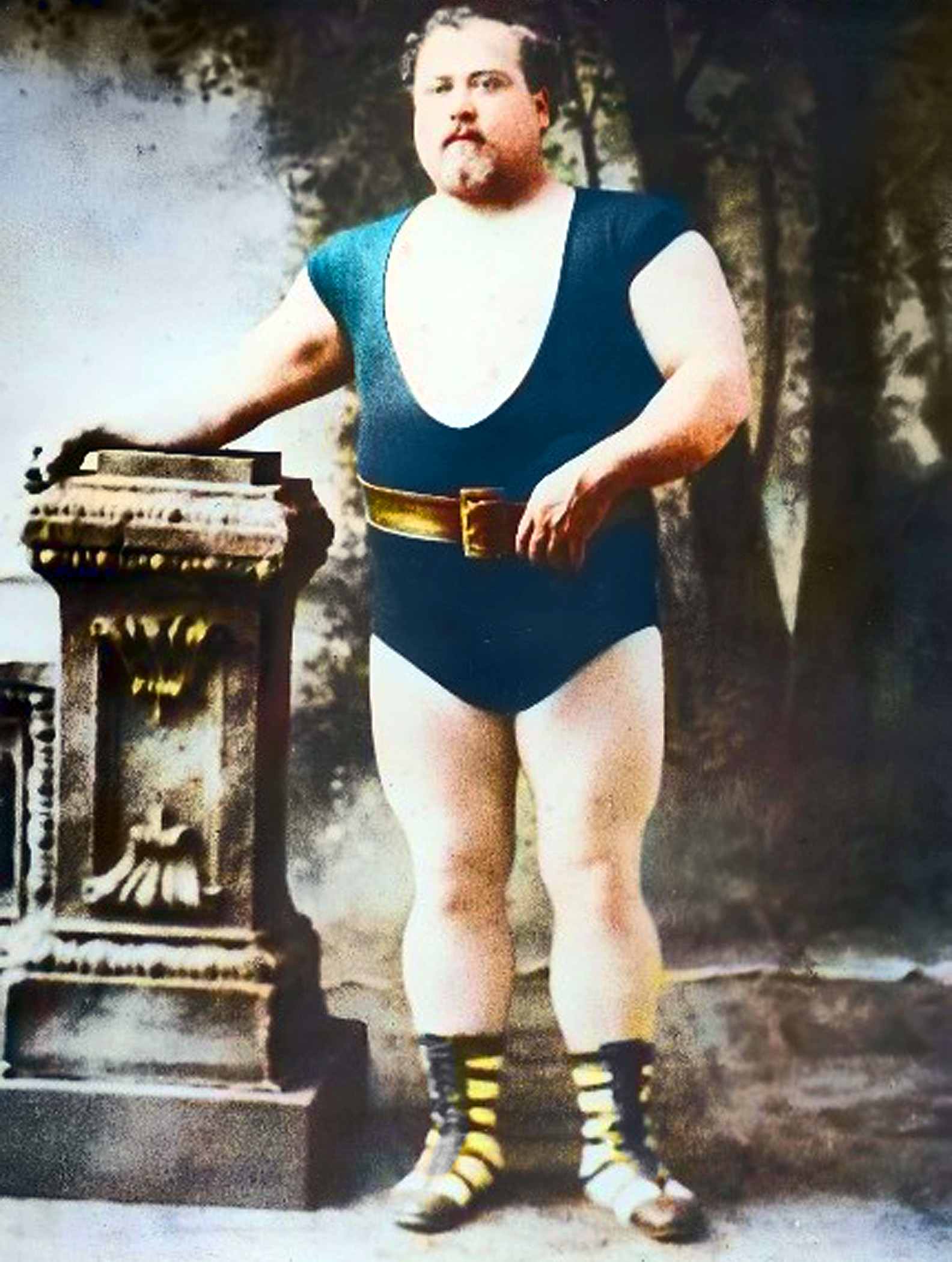
On February 7, 1653, he was named Superintendent of Finances at the age of 38. He could only hope to reach this position, as it was his ultimate goal. Although he was sought for the job after the death of the superintendent, he owed his appointment to his brother Basil, who was considered “a puppet” of Jules Mazarin, the young Louis XIV’s Chief Minister. However, Abel Servien, a more senior man, was chosen by the cardinal Mazarin to counteract Fouquet’s ambition. But Fouquet became the only supervisor when Servien passed away in 1659.
The holder of this high position had to meet the daily requirements of the state, which had been living on credit since 1635 and was deeply in debt. Nicolas Fouquet appealed to groups of creditors and lenders. Those in the financial industry who had faith in Nicolas Fouquet helped him build up a sizable network. Additionally, he made loans to the government at usurious interest rates, using the riches his father left him in 1640.
However, since the requirements of the French state were so crucial, he had to mortgage his possessions in the end. He played the affluent yet racked up significant debt for both the kingdom and his private spending (real estate acquisitions, maritime ambition, etc.). When Cardinal Mazarin passed away in March 1661, he had aspirations of becoming Chief Minister after rising to prominence in the French kingdom. He failed to see that the times had changed: Louis XIV was now preferring to rule without the assistance of a Chief Minister.
The Design of Versailles Was Inspired by His Chateau, Vaux-Le-Vicomte
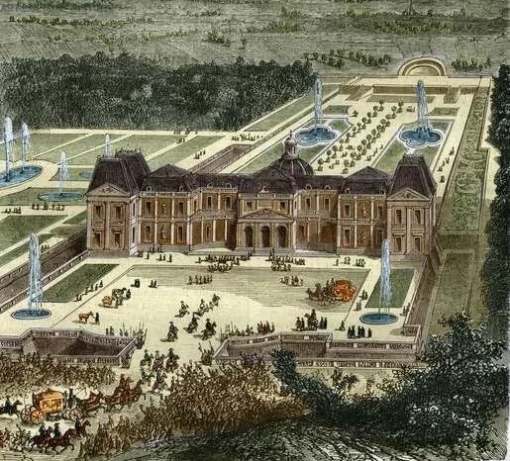
Between the royal palaces of Vincennes and Fontainebleau, near Vaux-le-Vicomte, Nicolas Fouquet acquired a castle in terrible condition in February 1641. He expanded the estate via purchases in an effort to turn it into a luxurious residence. He commissioned the works from the best artists of the time. Above all, he enlisted the services of a triumvirate with a good reputation: Charles Le Brun (painter, in charge of interior decoration), André Le Nôtre (landscaper), and Louis le Vau (architect).
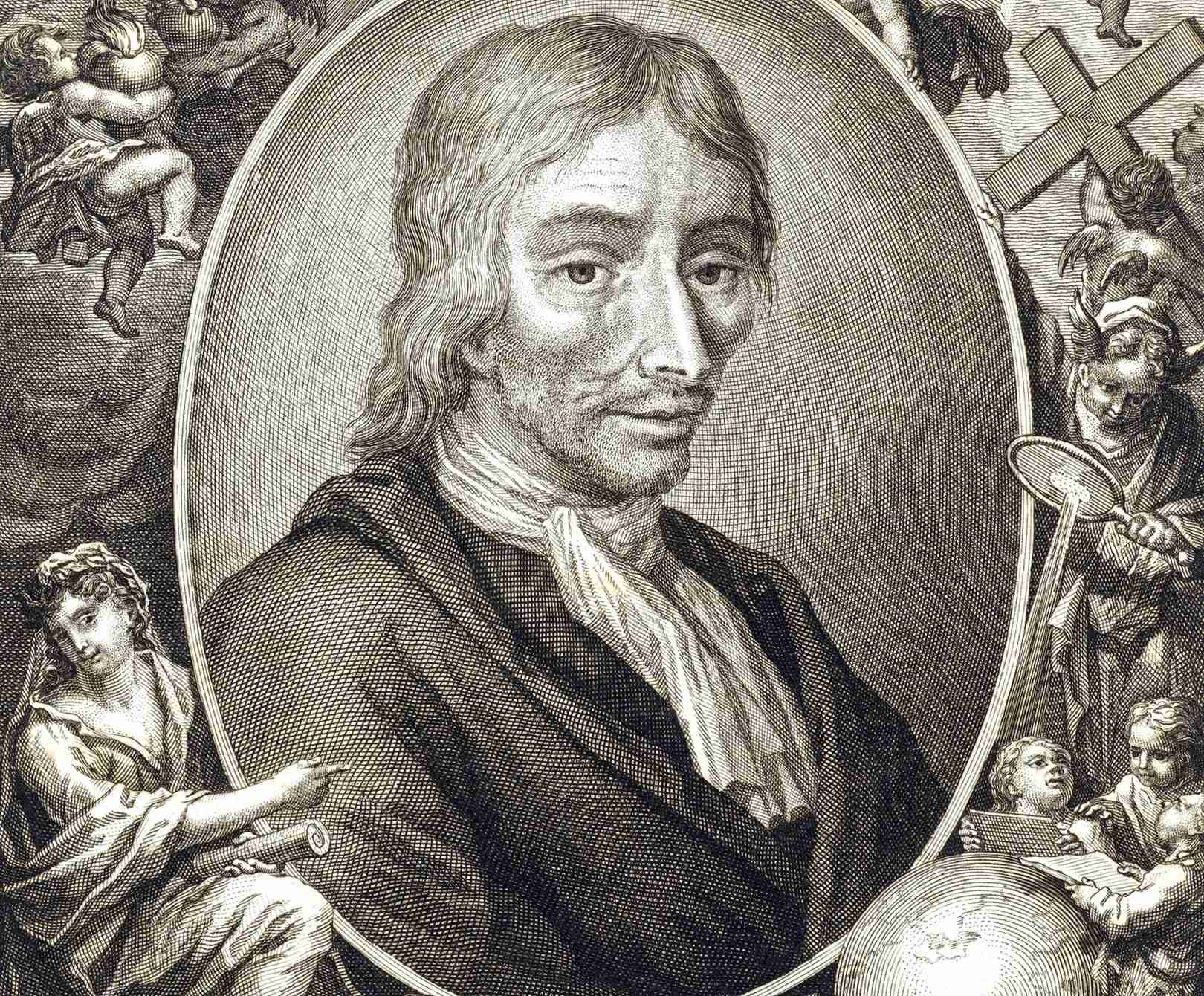
He pushed them to think beyond the box to create a distinctive ensemble. It was a success. Vaux-le-Vicomte is a marvel of architecture and landscape design, with viewpoints, terraces, waterfalls, basins, statues, the first formal gardens, and lavish interior ornamentation. Their skills would subsequently be put to use at Versailles by King Louis XIV.
France’s finance minister Fouquet had thrown a party in August of 1661 with a gala dinner, fireworks display, stage performance, and raffle to celebrate the opening of his beautiful new château (palace) Vaux-le-Vicomte. The guest of honor, King Louis XIV (1638–1715), envied the château so much that his face changed color from embarrassment, as if he was going to vomit.
Up to that point, Fouquet (1615–1680) had accomplished a significant amount of success in his life. Furthermore, he was just making predictions for the future of the office. Ultimately, he aimed for the position of Chief Minister. He’d be second only to Louis XIV in terms of authority if this happened. But Fouquet’s career came to an unexpected end after he put on the beautiful “fête,” or party, called Fouquet’s Fall today.
Ambitions of Becoming a Chief Minister
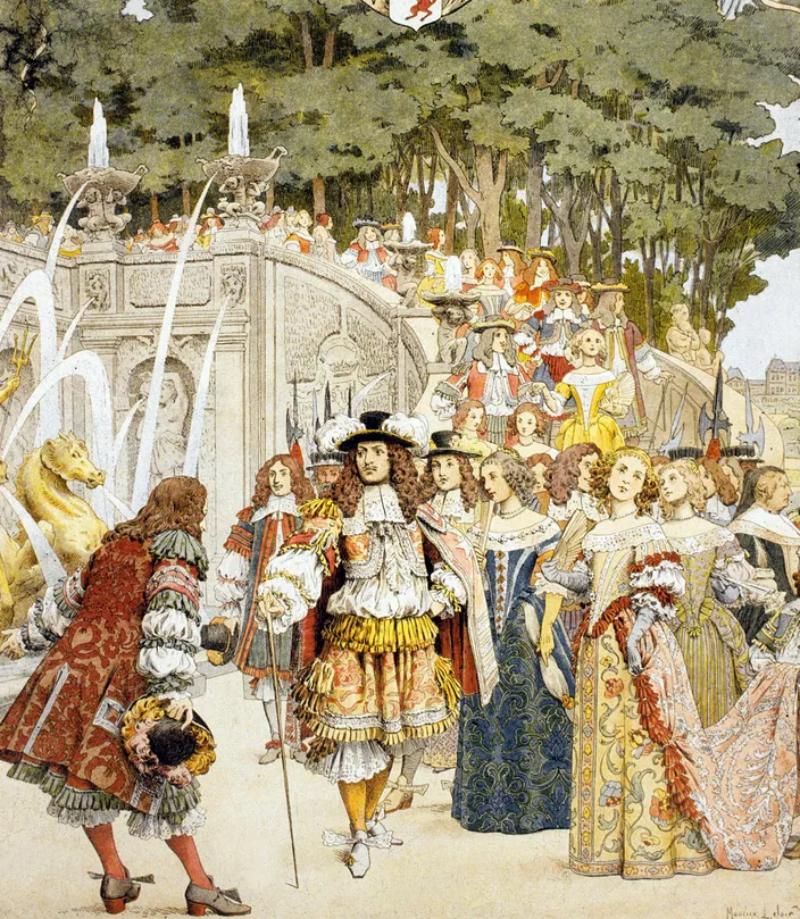
On August 17, 1661, Nicolas Fouquet held the famous opening ceremony for his chateau, Vaux-le-Vicomte. He was a very influential figure in France at the time. He had become the government’s top lawyer and attorney general. His expectations were higher, however. In March of that year, Prime Minister Jules Mazarin (1602–1661), who had long ruled over state matters for the infant Louis XIV together with the Queen Mother, passed away. Mazarin’s departure has resulted in a political vacuum and complicated state finances. He and Fouquet were probably the only ones who knew who had authorized which funds, taken out loans, and paid them back. Fouquet’s fortune and the state’s treasury were not always clearly separated.
With Mazarin’s death, a key position in the government was left unfilled. Fouquet strongly suggested that the young monarch, King Louis XIV, name him as his heir, but the King did not agree. Louis had doubts about the self-assured newcomer. The King then announced, to widespread astonishment, that he intended to become a one-man government, eliminating the position of Chief Minister. Fouquet, like many of his fellow courtiers and politicians, thought that the King would soon abandon politics in favor of parties, hunting, and ladies. To be on the safe side, however, Fouquet did all in his power to discourage Louis from going through with it.
He intended to prepare a lavish banquet for the king. He was well aware that the House of Bourbon frequently credited a successful party with a promotion. Fouquet leaned in and gave it his all. A grandiose party was due in three weeks, and he was scrambling to pull it off. Nothing could go wrong since all the artists in his court were participating in the preparations.
The Danger of Wild Animals
Fouquet planned a lavish dinner for Louis XIV, complete with 30 buffets, golden dinnerware, a theater, a raffle, and, of course, fireworks. The Sun King, however, was not in the least bit captivated. Only at royal festivities or significant triumphs were pyrotechnics permitted, and Fouquet had two fireworks displays that lit up the night sky. The King felt humiliated and intimidated by the event’s pomp and extravagant wealth. He started to believe that Fouquet was yearning for the throne. The only thing that could be said for sure was that Louis was completely over himself.
The Fronde, an uprising of nobles and parliament against the royal family from 1648 to 1653, occurred during Louis XIV’s childhood. He had dethroned the nobility of the sword and surrounded himself with courtiers to avoid another coup d’état by the nobles. But the bourgeoisie grew stronger because they could now buy offices and rise to the ranks of official nobility. Fouquet was such a citizen; rich, cultured, and ambitious. And to show that his ambition was not yet satisfied, Fouquet did not skimp on meaningful symbolism at his party.
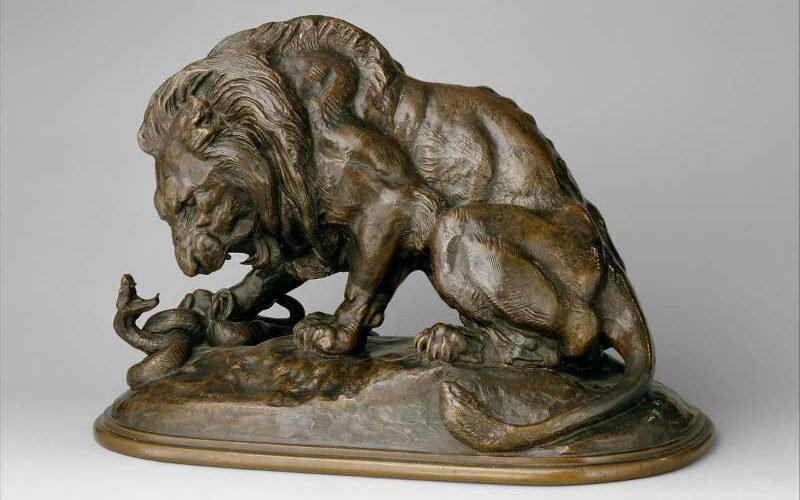
Squirrels, which were important to the Fouquet family, were shown all over the castle, from the outside to the allegorical paintings. The motto “Quo non ascendet?” (To what heights can I not rise?) was inscribed on the family’s coat of arms. A painting of a squirrel interacting with a lion and a snake was perhaps the most intriguing thing for the Sun King.
The lions and snakes were symbols that one had to be careful with. Even before La Fontaine began concealing moral teachings in animal fables, this was common knowledge among contemporary people. The lion had always been seen as a strong leader, while the snake was seen as the lion’s sneaky advisor. The snake and the lion got together to eliminate the squirrel. Since Mazarin’s death, royal adviser Jean-Baptiste Colbert (1619–1683), whose coat of arms depicted a snake, had grown closer to the King. He, too, wanted to be Chief Minister, but Fouquet, a financial juggler and arts patron, was standing in his way.
One day, Colbert presented the King with an allegation that Fouquet had fortified the domain of Belle-Ile. Colbert claimed that his spy, disguised as a merchant, returned with the news and that Fouquet had a garrison of 200 men and a formidable arsenal (400 cannons, 3 or 4 warships, etc.). Louis XIV decided to arrest Fouquet at Nantes in the Estates of Brittany.
Colbert worked as a clerical assistant at the court. He had meticulously documented Fouquet’s misbehavior for quite some time. An opportunity presented itself after the feast when Louis XIV was boiling with jealousy. Colbert then gave the king his list. Nicolas Fouquet was among them.
He was taken into custody six weeks after the Vaux-le-Vicomte fireworks incident. Embezzling state money and committing high treason were the charges. Finally, after a three-year trial, the judges handed down a life sentence for Fouquet. His fortress was sealed up. But before that, the Sun King had the artwork, tapestries, and even trees inside the Vaux-le-Vicomte moved to his court, and he even brought the painters to himself. He was transforming his father’s former hunting lodge at Versailles into a home, and so he required the services of architects and painters like Le Vau, Le Brun, and Le Nôtre to pull it off.
A Protracted Trial That Was More Political Than Legal
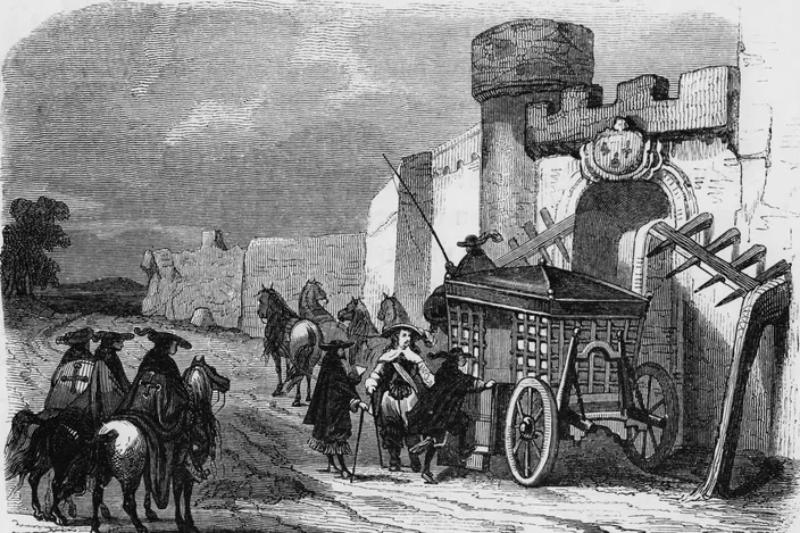
Nicolas Fouquet was accused of both lese-majesty (the insulting of a monarch; treason) and participating in a conspiracy against the royal authority. This included financial misconduct while performing his official duties. He was put on trial before an unusual court. Colbert and Louis XIV wanted this matter to be resolved soon, but more than three years passed due to the inquiry, legal disputes, and public arguments.
Additionally, things were not done in accordance with the rules: following Colbert’s orders, investigators fabricated papers; crucial witnesses were not heard; Nicolas Fouquet was held in isolation as a prisoner. Not to mention that the ingenious financial structures made it difficult to uncover proof. Additionally, since he was a smart, competent jurist, and lawyer, Fouquet defended himself and interfered with the trial.
Despite managing to save his life, Nicolas Fouquet was found guilty of embezzlement of public funds on December 22, 1664. Fouquet received the punishment of exile and property seizure. But Louis XIV raised the punishment to life in prison. For 26 years, Nicolas Fouquet was imprisoned in the Pignerol Fort. While waiting for his release, he died there in 1680.
The Lavish Celebration of August 17, 1661: The Fallacy of Grandeur
Nicolas Fouquet was also a great patron of the arts. And he supported the authors of the time like Madame Sevigne, La Fayette, Molière, Corneille, La Fontaine, and Charles Perrault. They were all affected by the folly of grandeur in his projects and his choices. Influential and powerful, he wanted to impress the gallery and please Louis XIV to win over the monarch. He had planned a celebration of unparalleled splendor just for this in his castle of Vaux-le-Vicomte in the summer of 1661. The feast he had prepared was of a magnificence never equaled until then, which left Louis XIV feeling humiliated.
Water jets shot out of basins and fountains as the carriages went by. He requested the famous majordomo François Vatel for supper, and he provided a meal that contained both savory and sweet foods. Les Fâcheux, an original comedy by Molière, was commissioned just for the occasion. As a result, he produced a comedy-ballet with musical interludes that would become highly popular with Louis XIV a few years later. This piece’s music had the Lully signature. And to cap off this very successful night, Nicolas Fouquet provided enormous fireworks, which were directed by Italian expert Torelli. The event was flawless, and charming for everyone in attendance.
According to legend, Louis XIV’s jealousy led him to decide to remove Fouquet, the director of finance, following this celebration. This is untrue, however, since the King chose to have this strong and troublesome person arrested in May. Jean-Baptiste Colbert, who wished to see Fouquet executed, was successful in persuading the monarch that the superintendent had committed misconduct. This was also because Fouquet was his rival for becoming Chief Minister.
On September 5, 1661, D’Artagnan, the captain lieutenant of the musketeers, captured Nicolas Fouquet in Nantes according to the king’s instructions. And on September 15, Louis XIV disbanded the Superintendence and replaced it with a Royal Council of Finance.
References
- Andrew Lossky, The Seventeenth Century: 1600-1715 (1967).
- Jacques De Maupeou, La Mère De Fouquet (1949).
- Inès Murat, Colbert (1980).