Humans have always wanted to predict and understand changes in the weather around them, and this desire has resulted in the development of meteorological instruments to measure properties of the air such as temperature and pressure. The first meteorological instruments were produced in Italy in the 17th century. Initially, the instruments were simply made to learn more about the atmosphere. Thermometers measured changes in temperature, and barometers pointed out variations in pressure; anemometers recorded wind speed, and hygrometers indicated humidity. Gradually, it was realized that these measurements could be used for weather forecasting, and today powerful computers at weather stations around the world perform countless measurements and weather forecasts.
- The 1600s – Glass Thermometer
- 1830 – Hair Hygrometer
- 1836 – Hygrometer
- 1870 – Sea Thermometer
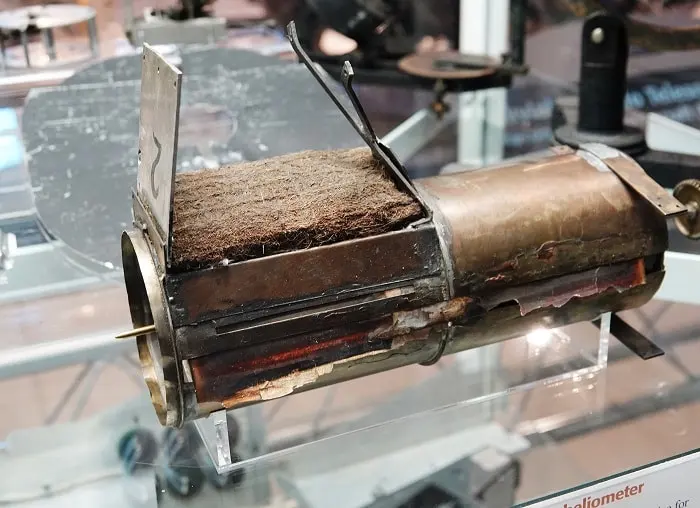
- 1881 – Pyrheliometer
- The 1920s – Weather Calculator
- The 1980s – Ocean Weather Station
- The 1980s – Rain Gauges
- The 1990s – Soil Thermometers
- 1990s – Thermometer
- 20th Century – Barograph
- 20th Century – Aneroid Barometer and Thermometer
- 20th Century – Aneroid Barometer
- 20th Century – Spinning-Cup Anemograph
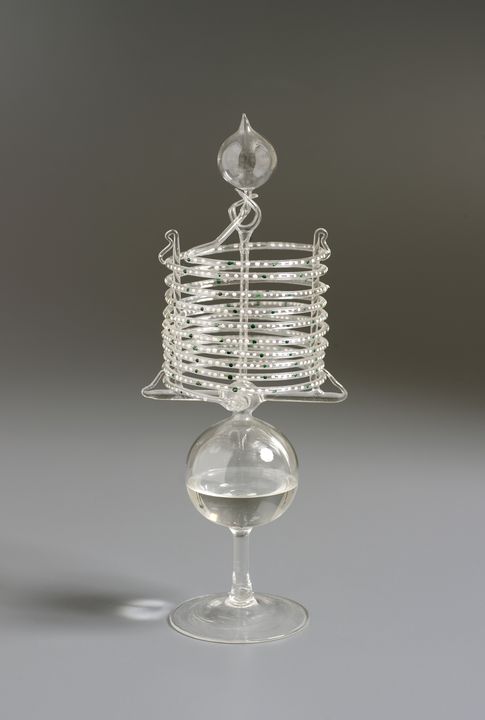
The 1600s – Glass Thermometer
Italian glass artisans created this exquisite glass thermometer. Alcohol is placed inside, and as the air temperature rises, the alcohol expands and climbs the spiral.
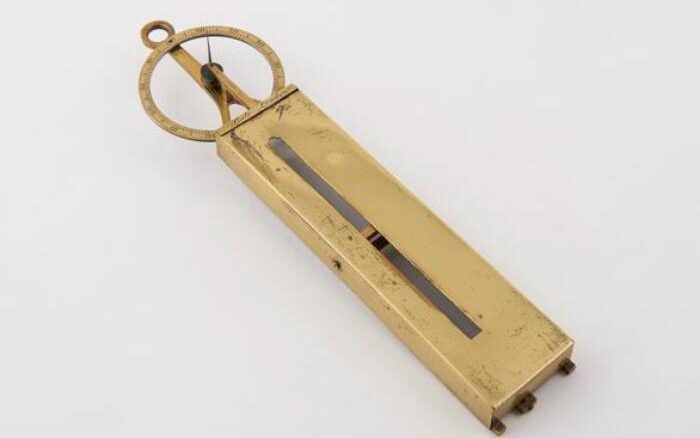
1830 – Hair Hygrometer
Human hair’s consistent and predictable capacity to expand in wet conditions and constrict in dry conditions serves as the foundation for this simple method of gauging humidity.
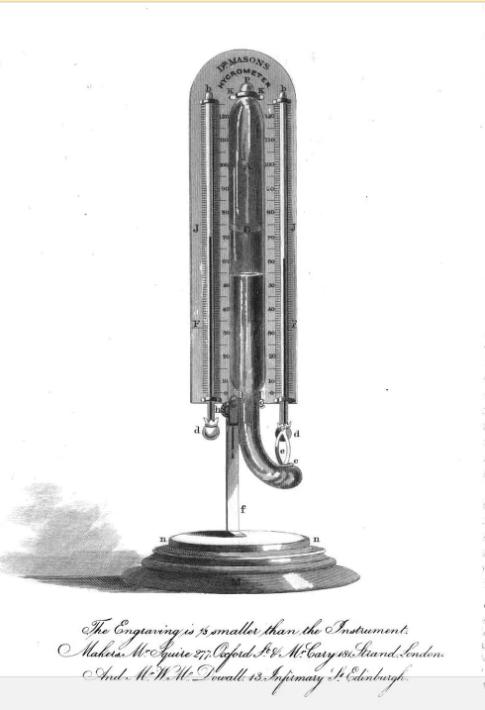
1836 – Hygrometer
Evaporation results in cooling, which results in a temperature differential between the thermometer’s two bulbs. To calculate humidity in the air, compare the differences between the wet and the dry bulbs of the hygrometer.

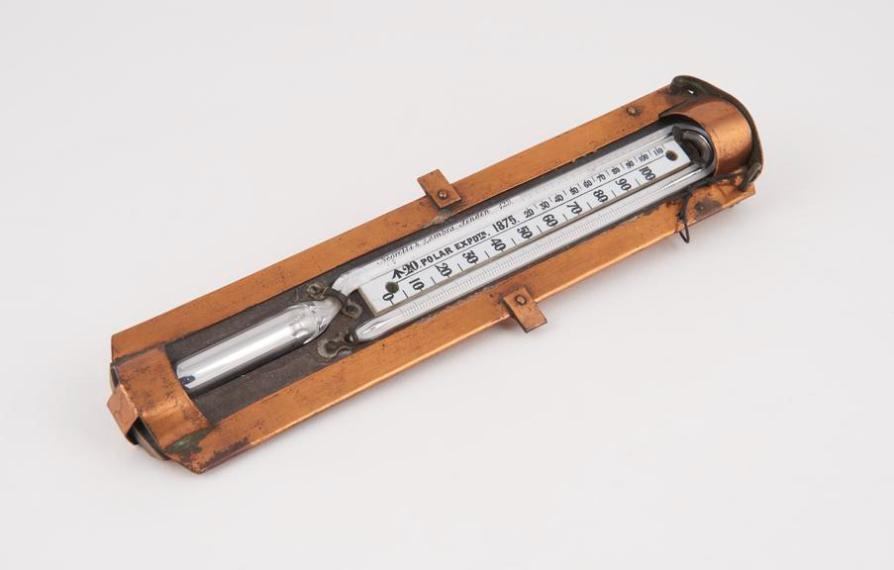
1870 – Sea Thermometer
This mercury sea thermometer was invented by James Six in England in 1869. This thermometer was used to measure sea temperature on the HMS Challenger ocean expedition between 1872 and 1876.
1881 – Pyrheliometer
Claude Pouillet designed the device known as the Pyrheliometer, which records the strength of the parallel Sun’s rays according to the amount of heat falling on a disk of a certain diameter at a given time. The duration of daytime can be measured with a pyrheliometer. The passage of the Sun leaves a burn mark on the card inside when the rays are focused on a glass sphere.
The 1920s – Weather Calculator
British meteorologist Lewis Richardson paved the way for numerical weather forecasts by creating specialized calculators. He is therefore known as “the man who invented weather forecasting”. Lewis Richardson was one of the first to apply math and physics to the science of weather forecasting.
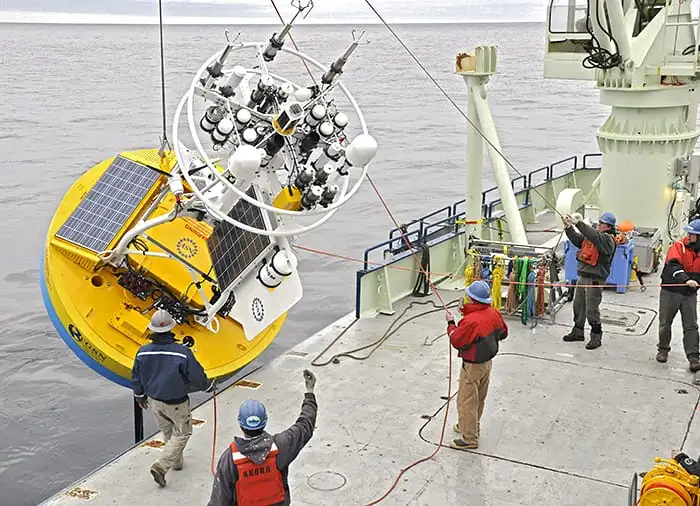
The 1980s – Ocean Weather Station
Since the 1970s, floating weather buoys have monitored the weather at sea. These stations move freely with the ocean currents and send measurements via satellite links. These stations are completely mobile and transmit data through satellite connections.

The 1980s – Rain Gauges
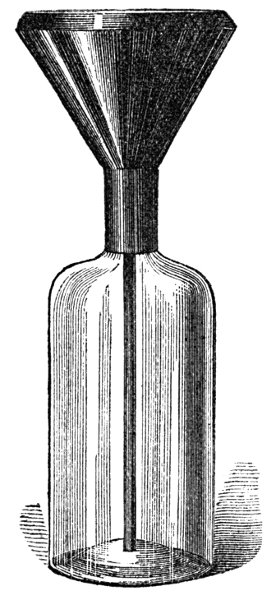
The depth of water entering the rain gauge serves as a measure of the amount of precipitation. To avoid splashing, it is positioned only slightly above the ground. The bottom end of the funnel’s curving tube where the receiving surface ends, always catches the final few raindrops, avoiding evaporation.
The 1990s – Soil Thermometers
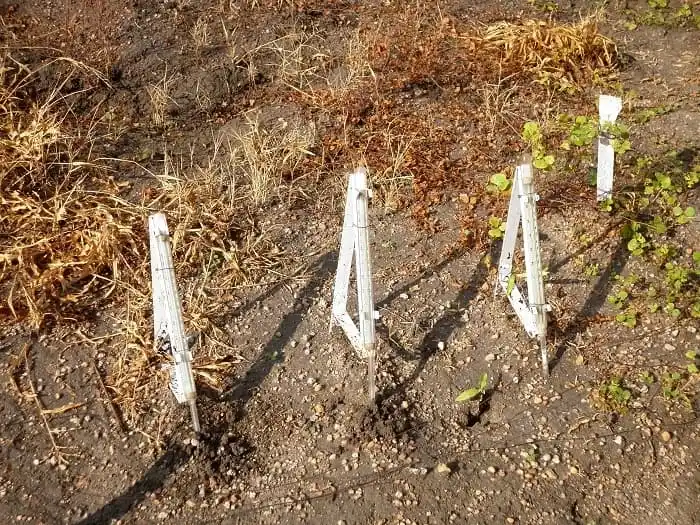
The temperature of the soil is measured at different depths using right-angle thermometers. This is also allowing us to determine how deep the ground frost has reached.
1990s – Thermometer
Every day, the maximum and minimum temperatures reached are recorded and displayed on the two opposite ends of the thermometer. It is the modern thermometer that was once on everyone’s walls.
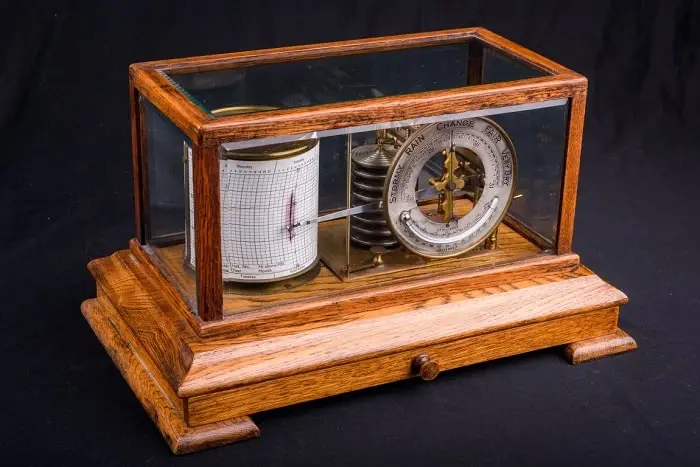
20th Century – Barograph
As the barometer reacts to the air pressure by expanding or contracting, this movement moves the pen attached to the barometer’s cap over the graph paper on the rotating drum.
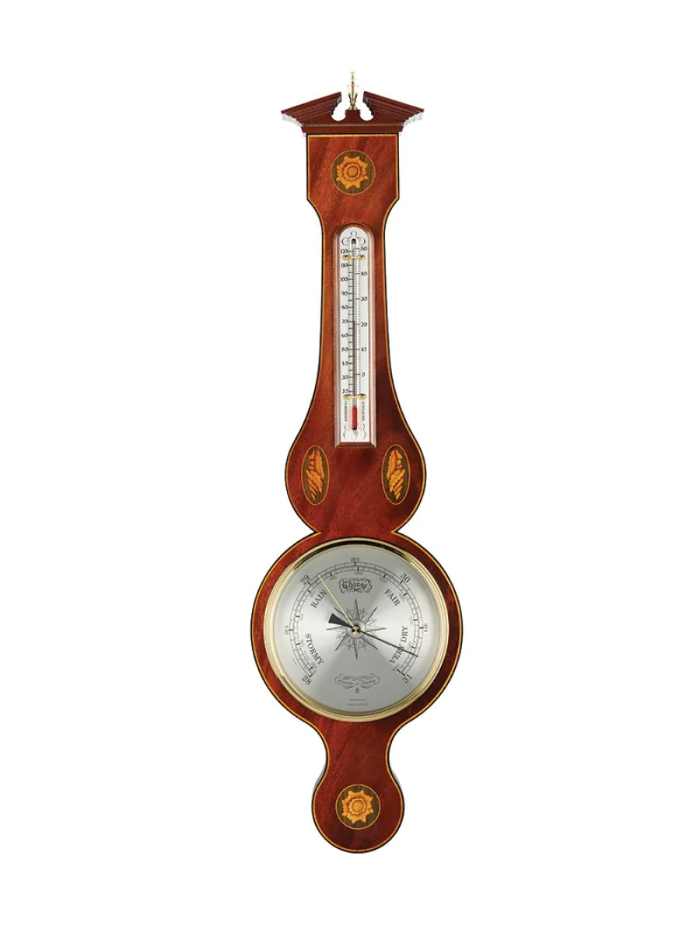
20th Century – Aneroid Barometer and Thermometer
In the 19th century, before the publication of weather reports, a combination of an aneroid barometer and thermometer, usually in a box like a musical instrument, helped homeowners make their own weather forecasts.
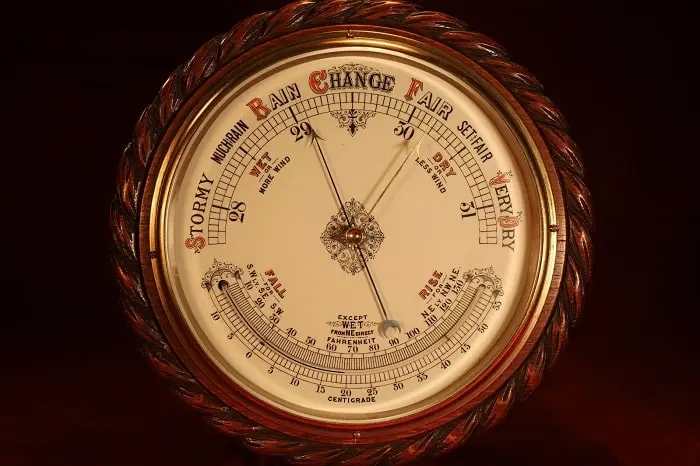
20th Century – Aneroid Barometer
The dial of an aneroid barometer shows changes in air pressure and gives clues about the weather. Falling pressure foretells stormy weather, while stable high pressure indicates clear weather.
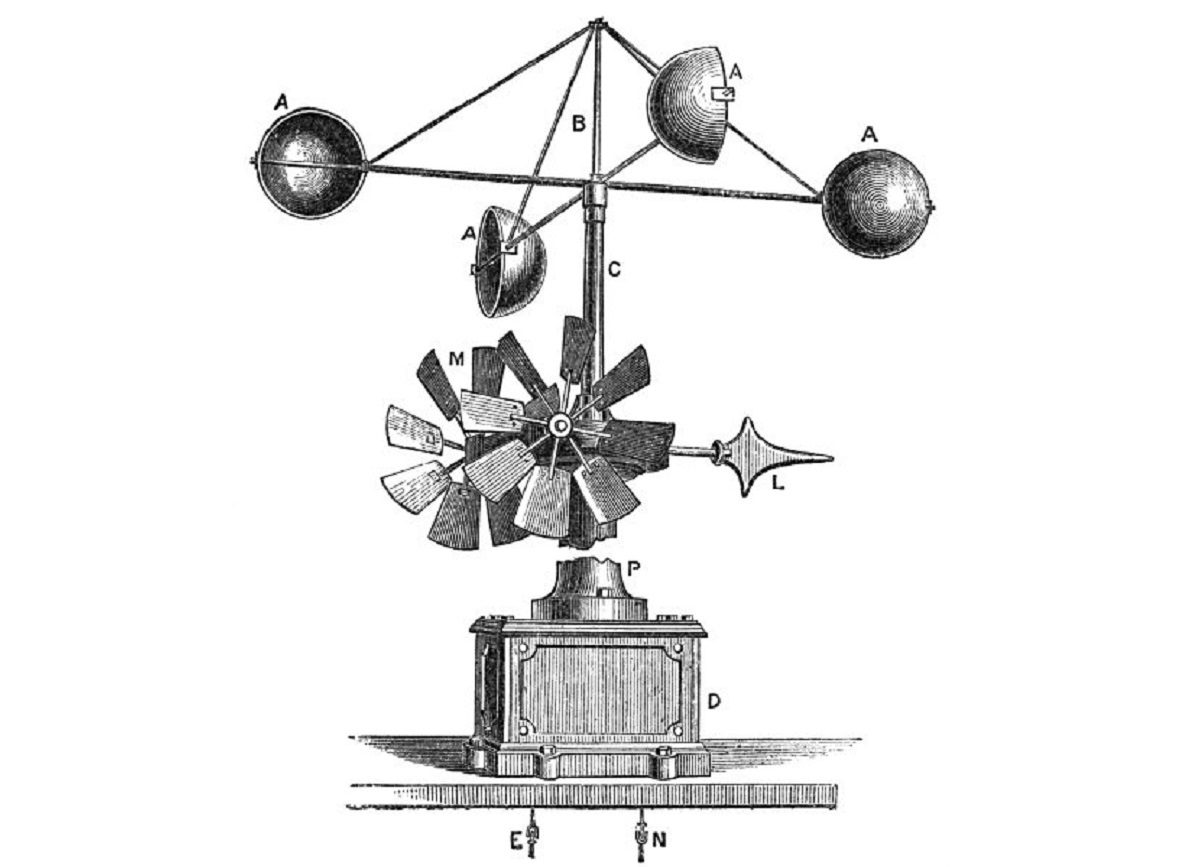
20th Century – Spinning-Cup Anemograph
The rotating-coated anemograph was invented in 1846 by the Irish astronomer Dr. John Robinson to measure wind speed. This anemograph regularly records the wind speed on a cylinder chart.