Set against the snow-blanketed peaks of the Eastern Alps and the baroque imperial palaces of Vienna and Salzburg, Christmas in Austria (Weihnachten) is an experience of unmatched sensory warmth, musical heritage, and alpine folklore. As the country that gave the world the most famous Christmas carol in human history—“Silent Night”—and perfected the open-air Advent market over seven centuries ago, Austria celebrates a deeply traditional season where candlelit Advent wreaths, walnut-and-jam butter cookies, terrifying horned mountain beasts, and the gentle chime of the Christkind’s silver bell take center stage.
Vienna’s 1298 “Krippenmarkt” and the Four Candles of Advent
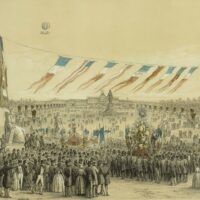
Austria’s Christmas market tradition is one of the oldest on planet Earth: back in the year 1298, Habsburg Duke Albrecht I granted the citizens of Vienna the official privilege to hold a December winter market (Dezembermarkt). Today, from mid-November until December twenty-fourth, more than twenty major Christkindlmärkte illuminate the squares of Vienna—from the grand neo-Gothic Rathausplatz (City Hall Square) and the imperial courtyard of Schönbrunn Palace to the baroque Belvedere and Salzburg’s Residenzplatz.
Inside every Austrian home and alpine inn, the four weeks of Advent are marked by two cherished rituals:
- The Adventkranz (Advent Wreath): Woven from fragrant fresh fir boughs and set on the dining table with four candles (traditionally three purple and one pink, or four deep red), the family gathers in the dark each Sunday afternoon to light one additional candle and sing traditional alpine Advent folk songs (Adventsingen).
- The Sacred Barbara Branch (Barbarazweig): On December fourth (Saint Barbara’s Day), Austrians cut a bare, frozen winter branch from a cherry or forsythia tree and place it in a vase of warm water indoors. According to folk belief, if the bare branch bursts into snowy white blossom on the exact morning of Christmas Eve (December twenty-fourth), the household—and any unmarried person who tended the branch—will be blessed with extraordinary luck or marriage in the coming year.
December 5 & 6: Heiliger Nikolaus vs. the Alpine Krampuslauf
Long before Western Santa Claus existed, Austrian winter folklore embodied the duality of light and darkness in the dramatic duo that visits every town on the night of December fifth (Krampusnacht) and the morning of December sixth (Nikolaustag).

While Heiliger Nikolaus (Saint Nicholas) walks through villages dressed in white-and-gold bishop’s vestments to reward well-behaved children with bags of mandarins, walnuts, gingerbread, and chocolate coins, he is shadowed by Krampus—a terrifying, pre-Christian Alpine beast dressed in thick shaggy goat or sheep pelts, wearing a hand-carved wooden mask with real ram or ibex horns, a foot-long red tongue, and heavy iron cowbells strapped to his waist that echo through snowy mountain valleys from a mile away. In Salzburg’s Gastein Valley, Tyrol, and Styria, hundreds of young men dressed as Krampuses stage wild torchlit street parades called a Krampuslauf (“Krampus Run”), charging down narrow cobblestone lanes rattling chains and swatting spectators’ legs playfully with birch-twig switches (Ruten) to drive away winter evil.
December 24: “Stille Nacht,” the Christkind, and Fried Carp
In Austria, the climax of Christmas occurs on the afternoon and evening of December twenty-fourth: Heiliger Abend (Holy Evening). Just four miles north of Salzburg sits the tiny village of Oberndorf bei Salzburg, where on Christmas Eve in 1818, after the church pipe organ broke down, a young assistant priest named Joseph Mohr handed a six-stanza poem he had written to schoolmaster Franz Xaver Gruber, who composed a gentle melody for two voices and a guitar in a few hours—performing “Stille Nacht, heilige Nacht” (“Silent Night”) for the very first time in history at Midnight Mass.
On December twenty-fourth across Austria, children never look for Santa Claus coming down a chimney; instead, both the decorated Christmas tree and the presents underneath it are brought secretly through the window by the Christkind—a golden-haired, winged angelic manifestation of the infant Jesus:
- The Locked Parlor Door and the Silver Bell: All afternoon on Christmas Eve, the living room door is kept locked while parents secretly decorate the fresh tree with real wax candles, straw stars, and sparkling sparklers (Sternspritzer). Once darkness falls, a parent rings a small crystal or silver bell inside the room—the signal that the Christkind has just flown away—and the doors swing open to the glowing tree as the family sings “Stille Nacht” together before touching a single gift.
- Gebackener Karpfen and Weihnachtskekse: For the traditional Catholic Christmas Eve dinner, many Viennese families serve Gebackener Karpfen (breaded, golden-fried freshwater carp fillets with creamy potato-mayonnaise salad), roast goose with red cabbage and potato dumplings, or warm frankfurters with horseradish before heading to Christmette (Midnight Mass).
- Vanillekipferl and Kletzenbrot: Throughout the night, tables overflow with homemade Austrian Christmas cookies (Weihnachtskekse), led by melt-in-your-mouth almond-and-vanilla crescents rolled in powdered sugar (Vanillekipferl), raspberry-jam-filled Linzer Augen, and rich Tyrolean dried-pear fruit bread (Kletzenbrot), before families spend the final smoky nights of December walking through their homes and barns with smoking pans of frankincense and herbs during the ancient Rauhnächte (“Smoke Nights”) to bless the house for the new year.