Traditional Romanian Christmas practices include international and regional elements. On December 6, children get presents in their boots when Moș Nicolae (St. Nicholas) arrives, and next, there is a time when Romanian people fast for Christmas (Postul Crāciunului), which begins on November 14 and ends on Christmas Day. During this Nativity Fast, the Romanians do not consume meat, eggs, or dairy items. The practice of butchering pigs (Tāierea porcului) is a major part of the Christmas meal, and Christmas Eve (Noaptea de Ajun) is when the hard work of decorating the tree and singing carols comes to a close. These Christmas customs are observed across Romania, even if they differ by location.
-> See also: 48 Countries That Celebrate Christmas Widely
Christmas Traditions in Romania
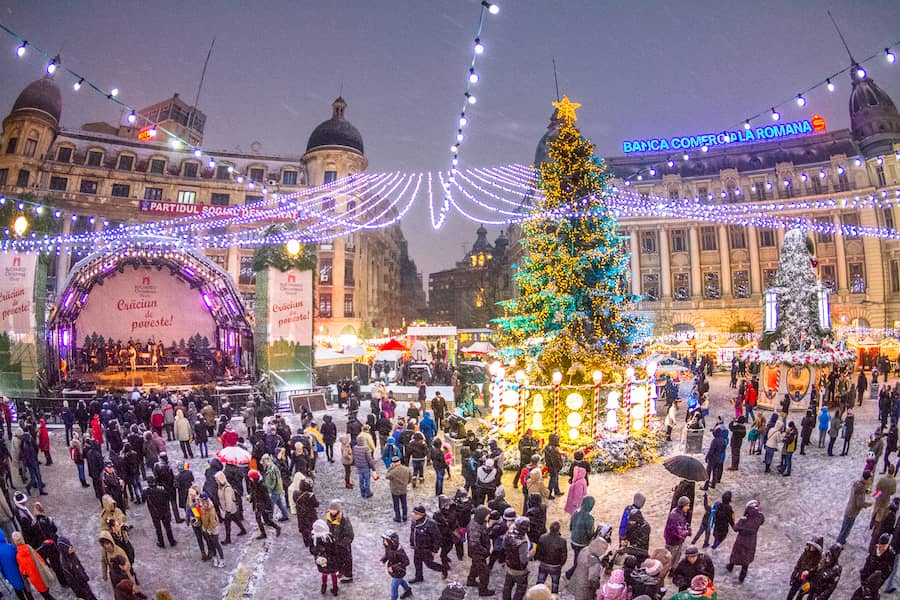
Around 87% of the Romanian population is Christian Orthodox and that’s why Christmas is more of a religious than a secular day for the country. There are distinct traditions and events that take place around Christmas in Romania. The country celebrates Christmas from December 20th until January 7th. During this period, people follow the following customs:
- Moș Nicolae Day: On December 6, in observance of St. Nicholas Day, Romanian kids polish their shoes and set them by the door in the hopes that Sfântul Nicolae would give them presents.
- Ajunul Craciunului: Romanians look forward to Christmas Eve, or “Ajunul Craciunului,” more than any other day of the year. On this night, Santa Claus (Mos Craciun) brings his gifts to Romanian homes. Caroling, or “colindatul,” is an important custom observed during this period.
- Christmas Tree: The Christmas tree remains in the home until January 7th after the entire family has decorated it a few days prior to Christmas.
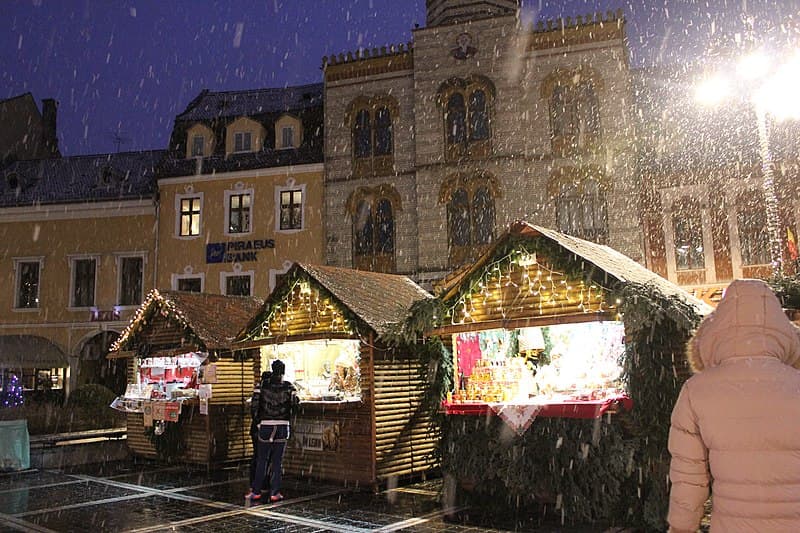
- Christmas Markets: The picturesque Christmas markets can be found in the medieval towns of Transylvania and Bucharest in Romania, and they are a relatively recent phenomenon in the country.
- Traditional Foods: Traditional Romanian Christmas dishes are roast gammon, pig chops, cabbage rolls filled with ground pork, and a fruit bread called “Cozonac.”
December 24: Ajunul Crăciunului (Christmas Eve)
Romania has its own traditions and rituals on Christmas Eve (Ajunul Crăciunului). On this day, December 24, the Christmas tree is decorated, and the celebrations officially start. On this day, kids visit neighbors’ homes, where they sing “Bună dimineața la Moș Ajun” (“Good Morning for It’s Christmas Eve”) and other Christmas songs for baked goods, fruit, and cash.
We come once a year
“Bună dimineața la Moș Ajun” (“Good Morning for It’s Christmas Eve”)
To wish you the best
May the good Lord help us
To get many pretzels and nuts!
As the sun goes down, Romanians get together to sing Christmas songs, hear stories, and get ready for the next day. Meeting with loved ones, decorating the home with lights, gift-wrapping, gift-exchanging, and gift-opening are the traditions linked to Christmas Eve. Traditional sweet pretzels called “Scutecele Domnului” (literally “the swaddling clothes of the Lord”) are made in the shape of a swaddled hand to honor the midwife who allegedly assisted the Virgin Mary with the delivery of Jesus.
-> See also: All 15 Countries That Don’t Celebrate Christmas
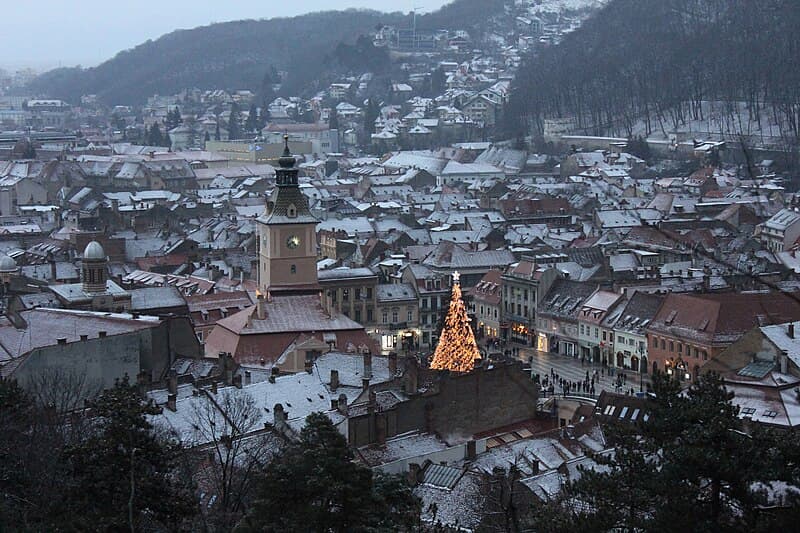
Cina de Crăciun (Christmas Eve Meal)
Cina de Crăciun or Christmas Eve dinner, is a Christmas family activity in Romania. Some typical handmade meals served during this dinner are the Turkish sarmale (cabbage rolls stuffed with rice and minced meat), cozonac (sweet bread filled with walnuts, poppy seeds, or Turkish delight), and others. The scent of these home-baked Christmas foods wafts through the streets of some districts, including Muntenia. To pray for a good harvest and health on Christmas Eve, Oltenia households in Romania gather around the fire at this time.
December 25: Crăciunul (Christmas Day)
On Crăciunul (Christmas Day), December 25, Romanians honor the birth of Jesus by attending church services as a nation. The Romanians are also masters in the kitchen and have a passion for pork. The butchering of the pig is a custom on this day since they celebrate Christmas with many pork dishes.

Some families share gifts on Christmas Eve, while others choose Christmas Day. Small, symbolic presents are the norm for Christmas in Romania. Some examples include chocolate, oranges, crayons, and paints. Over 40% of Romanians surveyed by Statista said they often provided footwear or clothing as Christmas gifts, while 35% said they typically offered games or toys. The practice of exchanging oranges as Christmas gifts may have begun when oranges were more expensive and scarce in Romania.
Decorating the Christmas Tree
Several days before Christmas, Romanians go Christmas tree (Brad de Crăciun) shopping and the decorated tree stays up until the 7th of January. They decorate their trees with organic materials like berries, pinecones, and little handcrafted ornaments. The decorations include commonplace items found in rural areas, like berries, pinecones, and evergreen branches.
Christmas Foods and Drinks in Romania
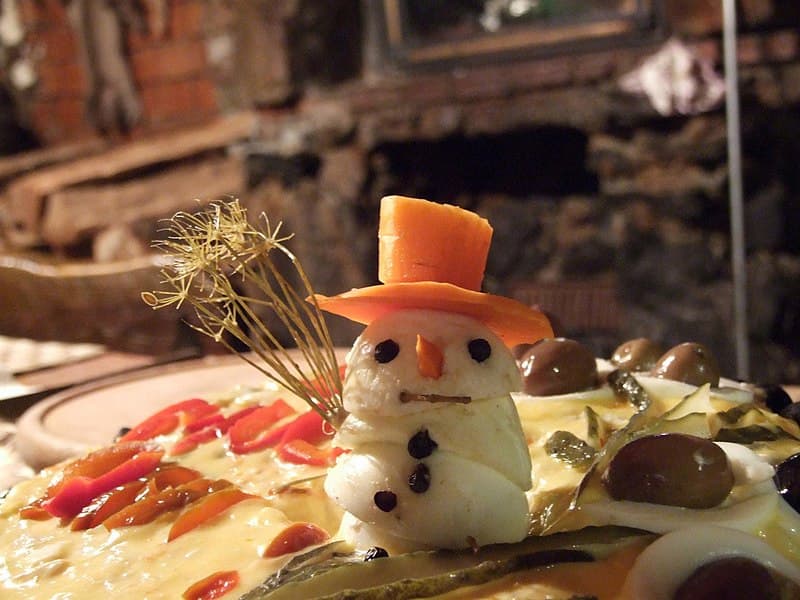
- Cozonac: Fruit bread with chocolate and crushed nut filling that spirals when cooked.
- Sarmale: Cream, polenta, and pickles accompany the sarmale, which consists of cabbage or vine leaves filled with rice, minced beef, onion, tomatoes, and herbs.
- Pork Specialties: Tochitura, a robust stew made with pork, tomato sauce, polenta, cheese, and pickles, is one of the pork specialties during Christmas dinners.
- Pork Stews and Roast Gammon: “Prahovita” is a Romanian bread that goes well with pork stews and roast gammon.
- Salata Boeuf: One typical side dish served at Christmas dinners is saladta boeuf, a beef salad.
- Deviled Eggs: Another common appetizer is deviled eggs, which are cooked eggs that have been peeled and filled with a mayonnaise and egg yolk combination.
- Fish Roe Salad: A salad composed with fish roe, given as an appetizer during Christmas dinners.
- Mulled Wine: Warm spiced wine known as mulled wine is a traditional drink in Romanian Christmas markets.
- Chimney Cake: Among the typical pastries sold at Christmas markets is the Chimney Cake, a dough that is sometimes enhanced with cinnamon, raisins, and almonds.
Post-Christmas Traditions
Boboteaza: In Romania and Moldova, Epiphany is called Boboteaza. On January 6, the feast of Epiphany (Boboteaza) is observed to remember Jesus’ baptism in the Jordan River. Romania also observes this day as an official public holiday.
Saint John’s Day: On January 7, Romanians celebrate Saint John’s Day, also known as Sfantul Ioan, which is also the conclusion of Christmas. Saint John the Baptist is honored on this day.
Pomana Mortilor: The Romanian custom of placing a glass of water and colac (traditional bread) on the table for Remembrance of the Dead (Pomana Mortilor) is based on the belief that the spirits of the dead pay a visit to the relatives of the deceased on this day. See “Day of the Dead.”
History of Christmas in Romania
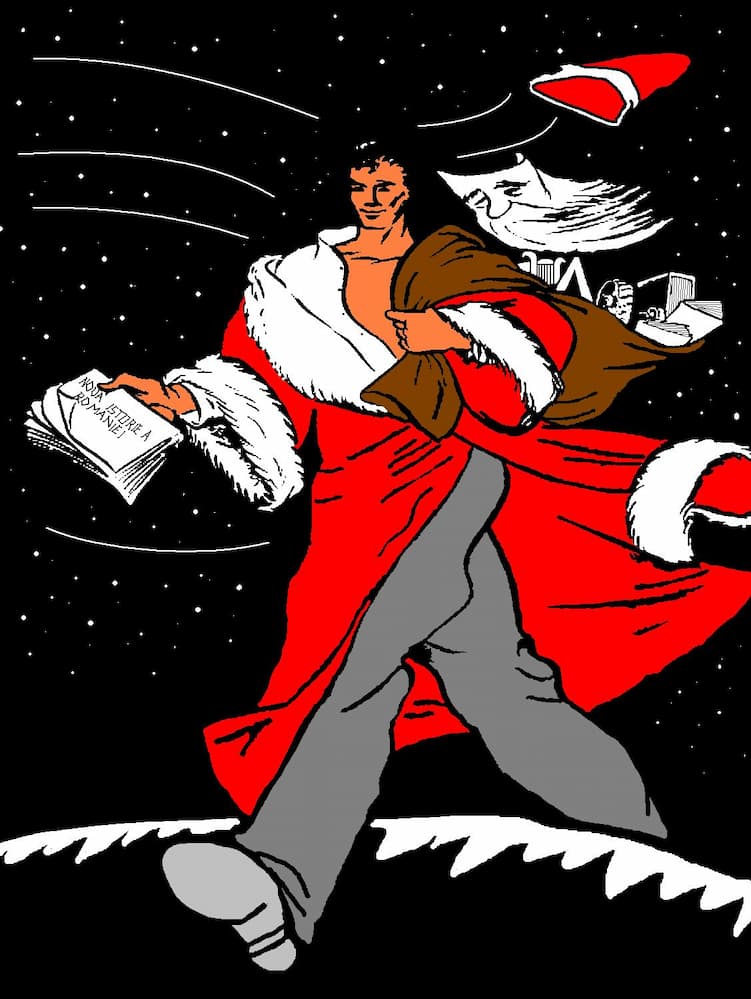
The Christianization of Romania brought the practice of celebrating Christmas. The public celebration of Christmas was frowned upon throughout the Communist era (1948–1989). “Winter Celebrations” replaced “Old Father Christmas,” and “Christmas Time” became “Old Man Frost” as the religious connotations of Christmas were rejected. Romanians still kept their long-ago Christmas traditions and hidden celebrations of Jesus’ birth.
They began celebrating Christmas with greater merriment after the fall of communism. Since the overthrow of Nicolae Ceausescu’s dictatorship in December 1989, some long-forgotten Christmas customs have made a triumphant return. In addition to its significance in the Bible’s chronology, the rural way of life that prevailed in Romania up to World War II had an impact on Christmas traditions there.
These practices have their roots in the pagan festival of the winter solstice, when the dead were believed to be reborn (see Koliada: Slavic Winter Solstice Celebration). The majority of Romanians are Orthodox Christians, who typically celebrate Christmas two weeks later, but like their Bulgarian neighbors, they celebrate it on December 25. This has only happened recently, as a new Romanian state was formed only after World War I ended. Orthodox Ukrainians also decided to celebrate Christmas on December 25 after the invasion of Russia.