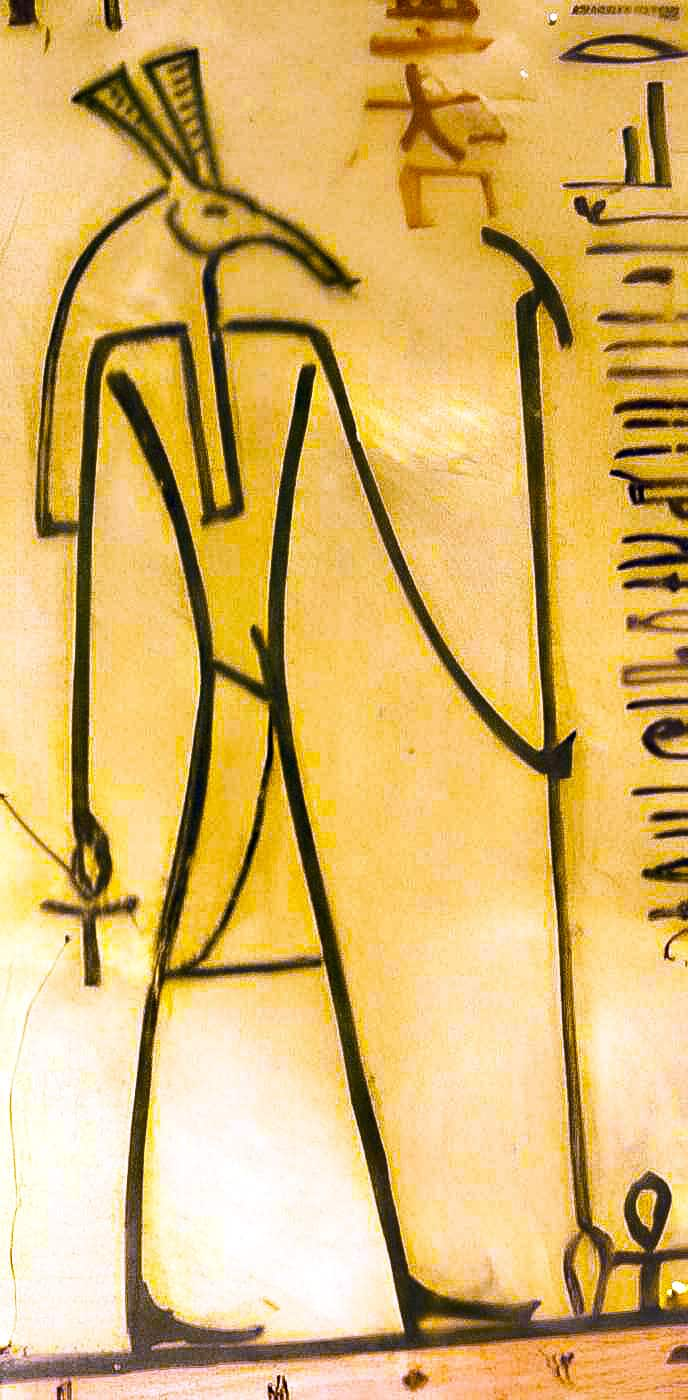
When modern museum visitors look at an ancient Egyptian relief depicting a sleek, dark canine standing on a royal standard or guiding a pharaoh by the hand, they almost instinctively call the figure Anubis. Yet for thousands of years along the Nile, priests and monarchs carefully distinguished Anubis from an equally ancient, fiercely martial canine deity who marched at the very front of every royal procession and military campaign: Wepwawet, the wolf-god of Upper Egypt whose name translates literally to “The Opener of the Ways.”
Anubis vs. Wepwawet: The Wolf and the Jackal
Although both Wepwawet and Anubis were canine deities closely linked to the necropolis of Abydos and the journey of the dead, ancient Egyptian theology and art separated their identities through clear visual and symbolic cues:
- Color and Species (Grey Wolf vs. Black Jackal): Anubis—the god of embalming and the cemetery—was almost always painted jet-black, symbolizing both the dark, fertile alluvial silt of the Nile rebirth and the discoloration of mummified flesh. Wepwawet, by contrast, was frequently painted with grey, white, or brownish fur, reflecting his association with the pale African wolf (Canis lupaster). When Ptolemaic Greeks arrived in Egypt, they recognized Wepwawet immediately as a wolf, naming his sacred cult capital of Asyut in Middle Egypt Lycopolis (“Wolf City”).
- Posture on the Royal Standard: While Anubis was typically shown crouching or lying down peacefully atop a tomb chest with his front paws outstretched, Wepwawet was almost universally depicted standing upright on all four feet atop a curved royal standard (the shedshed), alert, taut, and ready to charge forward as a scout.
“Opener of the Ways” in War and Royal Coronations
The Egyptian name Wep-wawet combines wep (“to open, part, or divide”) with wawet (“ways, roads, or paths”). Originally worshiped in Upper Egypt during the Predynastic and First Dynasty periods—appearing on the iconic Narmer Palette (circa 3100 BC) carried on a tall pole right ahead of the king—Wepwawet served first and foremost as the divine military vanguard and royal scout of the Pharaoh.
Whenever an Egyptian army marched out into the desert to confront foreign enemies, or whenever the Pharaoh processed out of his palace for the great rejuvenation festival of the Heb-Sed, priests carried the sacred wooden standard of Wepwawet at the absolute front of the column. Armed in temple reliefs with a war-mace and a bow and arrows, the wolf-god scouted the dangerous terrain ahead, “opening the ways” so the king’s army could advance safely to victory. In later Pyramid Texts, Wepwawet was even credited with “opening the way” of the Pharaoh’s physical birth from the royal womb and ascending into the sky alongside the solar barque of Ra.
Abydos, the Osiris Mysteries, and the Duat
During the Middle Kingdom (circa 2055–1650 BC), as the cult of Osiris—lord of the underworld—grew into the most popular religious movement in Egypt centered at the holy city of Abydos, Wepwawet was seamlessly integrated into the royal funerary drama as the loyal eldest son and champion of Osiris.
Every year at Abydos, thousands of pilgrims gathered for a multi-day sacred passion play reenacting the myth of Osiris’s death and resurrection. Before the golden statue of Osiris could be carried out of his temple across the desert wadi to his mythical tomb at Umm el-Qa’ab, the first day of the festival belonged entirely to Wepwawet: carried out at the head of a mock-battle procession, the wolf-god struck down the invisible agents of Set and cleared the desert road of hostile demons. For every deceased Egyptian soul entering the dark, treacherous caverns of the Duat (the Underworld), Wepwawet performed one final, vital service: participating in the Opening of the Mouth Ceremony (using the sacred iron adze blade to touch the mummy’s lips so the deceased could breathe, eat, and speak again in eternity) and walking ahead of the soul with his keen wolf’s eyes to open the locked gates of the afterlife.