The genetic code, Down’s syndrome, writing the first computer program… These happenings marked significant scientific progress at the time, but the scientists who made them have been forgotten. They all had one thing in common: they were female. The Matilda effect is the official moniker for this occurrence. In the 19th century, women in Europe were essentially banned from the field of science in the name of their so-called innate inferiority.
Sisters, mothers, spouses, and daughters of scientists contributed to the advancement of the field alongside their male counterparts, but their contributions are often overlooked, as was the case with Mileva Marić, the physicist who was married to Albert Einstein.
The Matilda effect: the phenomenon that makes women scientists invisible
In 1968, sociologist Robert King Merton introduced his theory on the Matthew effect, named after a verse from the Gospel of Matthew: “Whoever has will be given more, and they will have an abundance. Whoever does not have, even what they have will be taken from them.” This theory explains how some great people have been recognized at the expense of their partners, who often participated in their research.
Margaret W. Rossiter, a historian of science, developed and applied Robert King Merton’s theory to women in science in the early 1980s. She dubbed this phenomenon the “Matilda effect” in honor of feminist activist Matilda Joslyn Gage, who, towards the close of the 19th century, had spoken out against the erasure of women from the scientific community.
Trota of Salerno
The gynecological treatise “De passionibus mulierum curandarum” (or “About women’s diseases”), written by the 11th-century physician and surgeon Trota of Salerno, was translated into several languages in the Middle Ages.
It was unimaginable in those days for a woman to have such expertise. Therefore, males were given credit for the effort surrounding her numerous creations. Trota or Trotula of Salerno was actually the world’s first gynecologist.
Jocelyn Bell Burnell
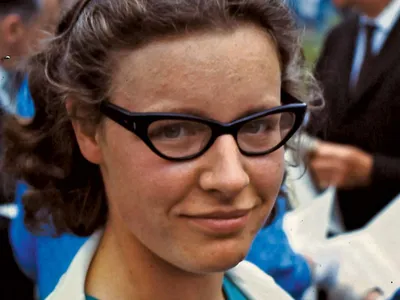
In the mid-1960s, astronomy enthusiast Jocelyn Bell started her studies in radio astronomy at the University of Cambridge, where she also began, under the supervision of astronomer Anthony Hewish, the building of a radio telescope to investigate quasars.
Without the astronomer’s backing, she built the instrument in 1967 and made the discovery of objects that would be called pulsars. However, it was Anthony Hewish whose name appeared in the paper when her study findings were published in Nature in 1968. In 1974, he and Martin Ryle won the Nobel Prize in Physics again.

Rosalind Franklin
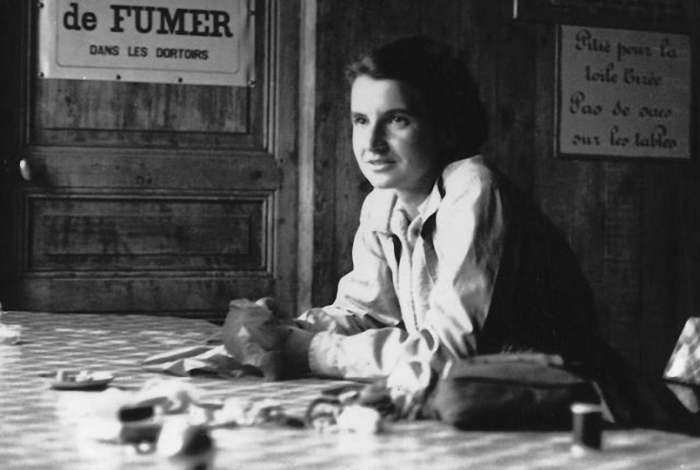
British-born scientist Rosalind Franklin is now well recognized for her pivotal contribution to the identification of the DNA double helix. She did the research that led to the publication of the results in the scientific journal Nature, but it was her colleagues James Watson and Francis Crick—with whom she did not have the best working relationship—who published the results, which involved the now-famous photograph No. 51, in which the two helices of the structure of DNA are visible.
At Maurice Wilkins’s request, both Rosalind Franklin and the scientist with whom she collaborated were solely mentioned in the acknowledgements.
Nine years later, in 1962, James Watson, Francis Crick, and Maurice Wilkins were given the Nobel Prize in Medicine for “their” discovery of the structure of DNA. The late Rosalind Franklin has been mostly forgotten since her death.
Marthe Gautier
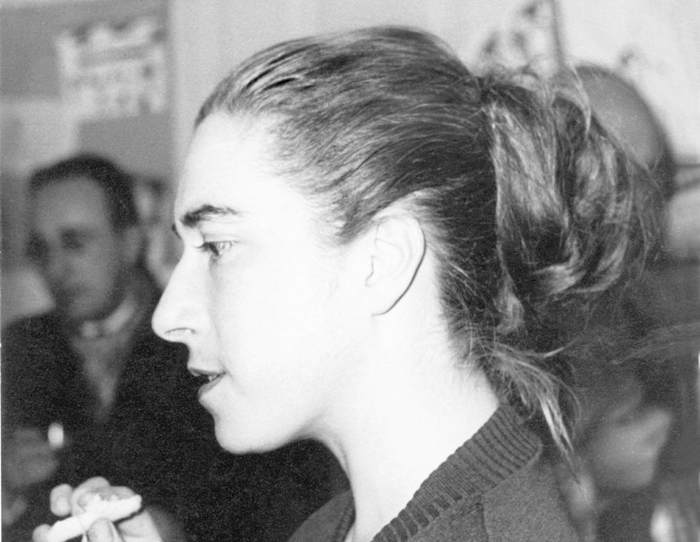
Together with Raymond Turpin, chief of the pediatric section at the Trousseau Hospital, Marthe Gautier studied polymalformative disorders, including Down’s syndrome, in a little laboratory they set up in the 1950s. The additional chromosome she found in children with “mongolism,” the word used at the time to describe Down syndrome, was a major breakthrough.
This finding was crucial to elucidating the disease process. Ultimately, however, credit for the discovery was given to a man named Jérôme Lejeune, and her name—spelled incorrectly—was included below Jérôme’s as the second signatory on the publication verifying the findings acquired by the French team in 1959.
The Inserm Ethics Committee (IEC) didn’t come around to the idea that “the discovery of the supernumerary chromosome, the part of Jérôme Lejeune (…) is unlikely to have been preponderant,” until 1994.
Mileva Einstein
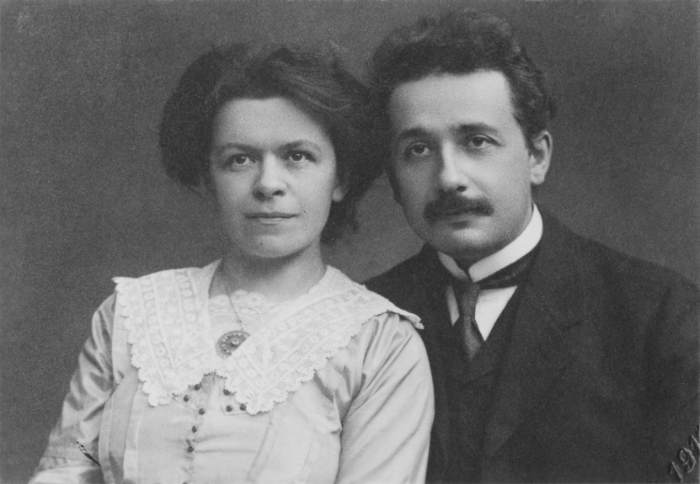
Mileva Einstein (Mileva Marić), the wife of Albert Einstein, was another woman who fell prey to the Matilda effect. Mileva Einstein followed in her husband’s footsteps by pursuing a profession in physics and mathematics.
While no one doubts Albert Einstein’s brilliance, new research is focusing on Mileva Einstein’s contribution to his professional success. particularly with regard to the findings about space-time and the velocity of light.
Especially after the pair have had a few interactions, this may come to light. And for good reason, the very gifted, Mileva Einstein regularly corrected the work of the scientist, as evidenced by this letter from 1901: “How happy and proud I shall be when we have both conducted our work on movement relative to a victorious conclusion!”
Despite this letter and others like it, Mileva Einstein’s role in Albert Einstein’s achievements is still very weakly estimated today due to a lack of evidence.
Lise Meitner
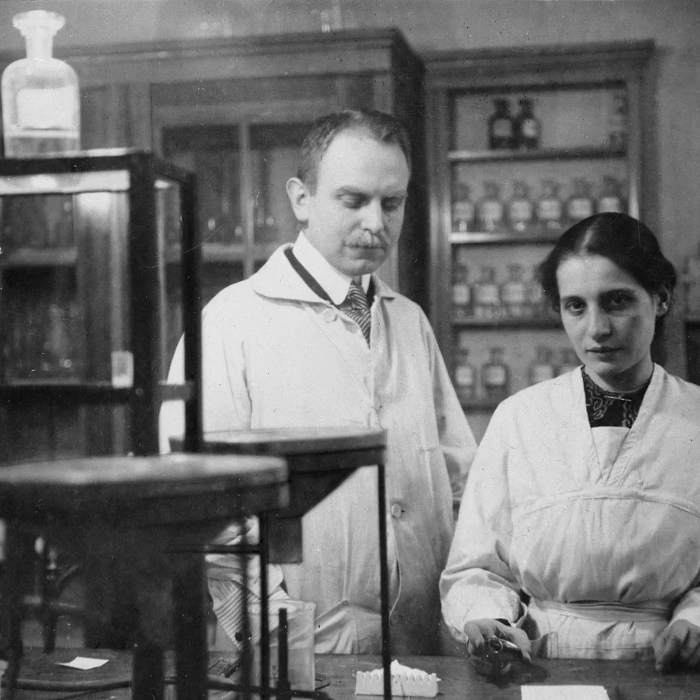
At a time when higher education was difficult for women, Lisa Meitner earned a Ph.D. from the University of Vienna in 1901. She became the second woman to receive a doctorate from the University of Vienna.
She started working at the Kaiser Wilhelm Society for the Advancement of Science in 1911, in the chemistry department led by Otto Hahn.
When the physics department was first established, she took over as its head. The partnership between Otto Hahn, a chemist, and Lise Meitner, a physicist, was very productive.
Fritz Strassman joined the two scientists in 1934 in their pursuit of knowledge on artificial nuclear processes. The discovery of fission in 1938 was crucial to the development of the atomic bomb.
Lise Meitner, who came from a Jewish family, was forced to leave for Sweden when Austria was annexed by the Nazi authorities. Given her predicament, Lise Meitner was not credited when the group’s findings appeared in the December issue of the scholarly journal Naturwissenschaften that same year.
Thus, Otto Hahn and Fritz Strassman shared the 1944 Nobel Prize in Chemistry.
Ada Lovelace
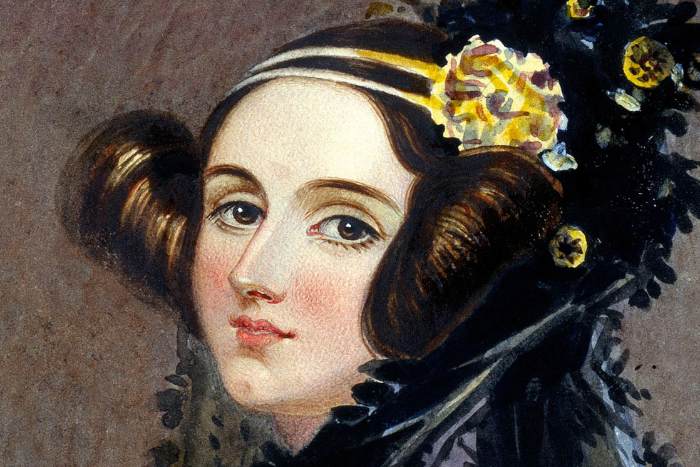
The idea that a woman might be interested in, much less talented at, computer technology was unthinkable in the 1800s, when the field was still dominated by men.
Ada Lovelace, often known as the “Princess of Parallelograms,” was a mathematician who, starting in the 1840s and continuing forward, devoted a great deal of time and energy to translating the writings of Charles Babbage (her own professor) into French. She translated it, but was she pleased with the results?
Because, in fact, she added her own (many) insights. Among these were formulas for determining Bernoulli’s figures. In a nutshell, what Ada Lovelace created is widely recognized as the world’s first computer program today.
Ada Lovelace gave computer science a fresh perspective by treating programming as a language. Nevertheless, her impact on computer science is mostly unknown.