

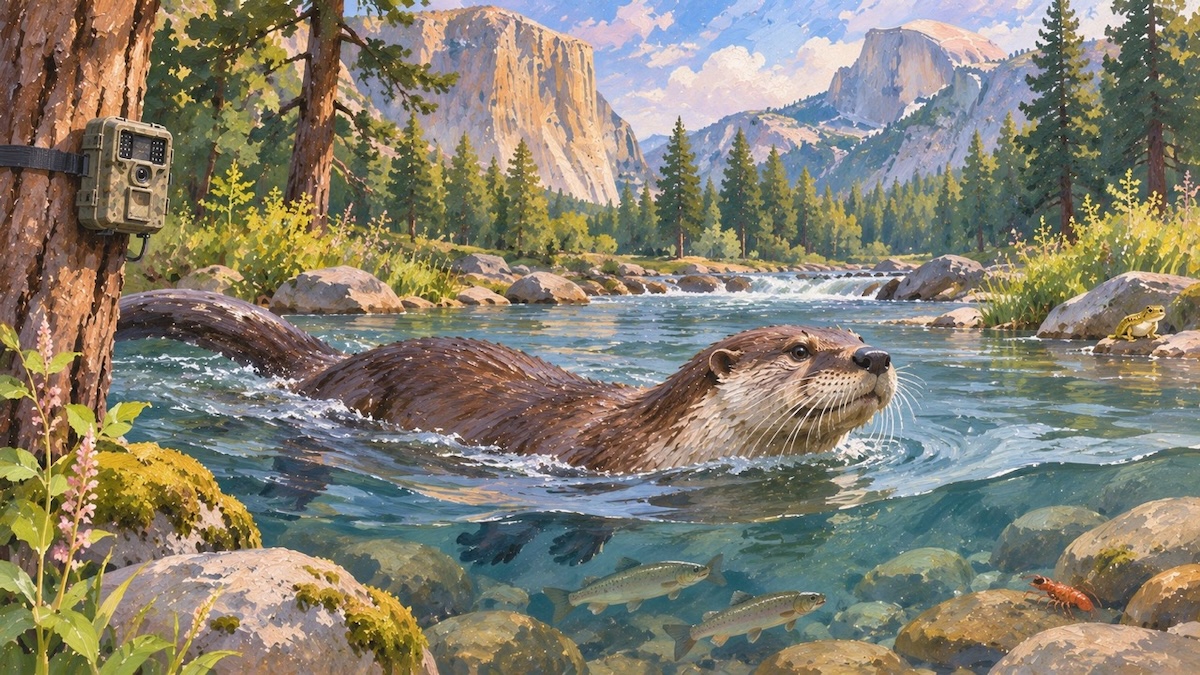
Yosemite National Park is asking visitors to report North American river otter sightings after trail-camera footage recorded one in Yosemite Valley. The observations will help wildlife researchers map where the animals travel and understand how they use the park’s extensive network of waterways.
In a November 19 announcement, the National Park Service (NPS) shared the trail-camera footage and invited visitors to contribute their own observations. The request is part of a wider effort to improve knowledge of the animals’ distribution across Yosemite.
A Large Area to Monitor
A river otter can travel between five and ten miles in a day along rivers and streams, according to the National Park Service. Yosemite contains approximately 1,700 miles of streams and 3,200 lakes, according to the park’s hydrology overview.
That network makes it difficult for researchers to establish where individual otters regularly feed, travel or settle. Sightings submitted from different parts of the park can help build a clearer picture of their movements.

Otters Have Been in Yosemite Since 2014
The recent trail-camera recording does not mark the species’ first appearance in Yosemite. The Yosemite Conservancy reports that river otters were first observed in the park in 2014. They may have moved into Yosemite as water levels declined elsewhere during drought conditions.
Their presence has raised questions about interactions with other wildlife, particularly the Sierra Nevada yellow-legged frog. The endangered amphibian has been the subject of restoration and reintroduction work in Yosemite. River otters are known predators of these frogs, but the effect of otter predation on recovering frog populations remains uncertain.
What the 2026 Monitoring Project Will Examine
The Yosemite Conservancy is supporting a 2026 River Otter Inventory and Monitoring Project in partnership with Yosemite National Park. Researchers aim to assess the animals’ distribution, their role in park ecosystems and their potential impact on frog restoration efforts.
The project combines several methods: visual surveys, camera traps, environmental DNA sampling, scat collection and scent-detection dogs. Genetic analysis of scat samples will help identify individual otters, allowing researchers to build a more detailed picture of their presence across the park.

The monitoring effort will also examine whether otters are affecting the recovery of Sierra Nevada yellow-legged frogs. The Conservancy says frog numbers have increased through restoration and reintroduction work, but the consequences of predation by river otters are not yet clear. Knowing where otters establish regular activity areas could help park managers select locations for future frog reintroductions.
How to Report a Sighting
Visitors who encounter a river otter in Yosemite are asked to record the location, date and time of the observation. Written reports can be submitted in the comments section of the park’s November 19 social media announcement or through the NPS contact form. Photographs and videos can be sent through direct messages to the park’s Instagram account.
Sources
Primary and institutional sources
- National Park Service: November 19 River Otter Announcement. The park’s request for public sightings and details on how to submit observations.
- National Park Service: River Otter Sighting on Yosemite Valley Trail Camera. Official trail-camera footage shared by the park.
- Yosemite Conservancy: River Otter Inventory and Monitoring Project. Background on the 2014 sightings, the 2026 monitoring work, research methods and the project’s focus on Sierra Nevada yellow-legged frogs.
- National Park Service: Hydrology and Watersheds. Official information on Yosemite’s streams, lakes and watersheds.
- National Park Service: Contact Yosemite. Official channel for submitting written observations.
Secondary reporting
Popular Science: Yosemite Needs Your Help Tracking River Otters, November 20, 2026. The secondary report that brought attention to the park’s public request.