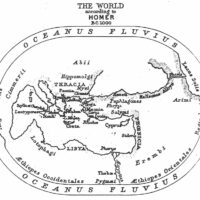
“Terra incognita” (Latin for “unknown land”) is a historical term in cartography referring to land masses or areas that were not yet mapped or described at the time. The term appears on old sea or land maps of regions that were still unexplored or only partially known. Many maps adorned such areas with dragons or other mythical creatures.
Etymology of Terra Incognita
- Terra: Derived from the Latin term for ‘earth’ or ‘land.’ Corresponding English terms encompass terrestrial, territory, and terrain.
- Incognita: Originating from the Latin cognoscere, meaning ‘to know’ or ‘be acquainted with,’ with the negation ‘in-‘ as a prefix. This is connected to English words like know and the Greek term γνῶσις (gnosis) for ‘knowledge.’ Relevant English terms linked to this include agnostic, cognition, and gnosticism.
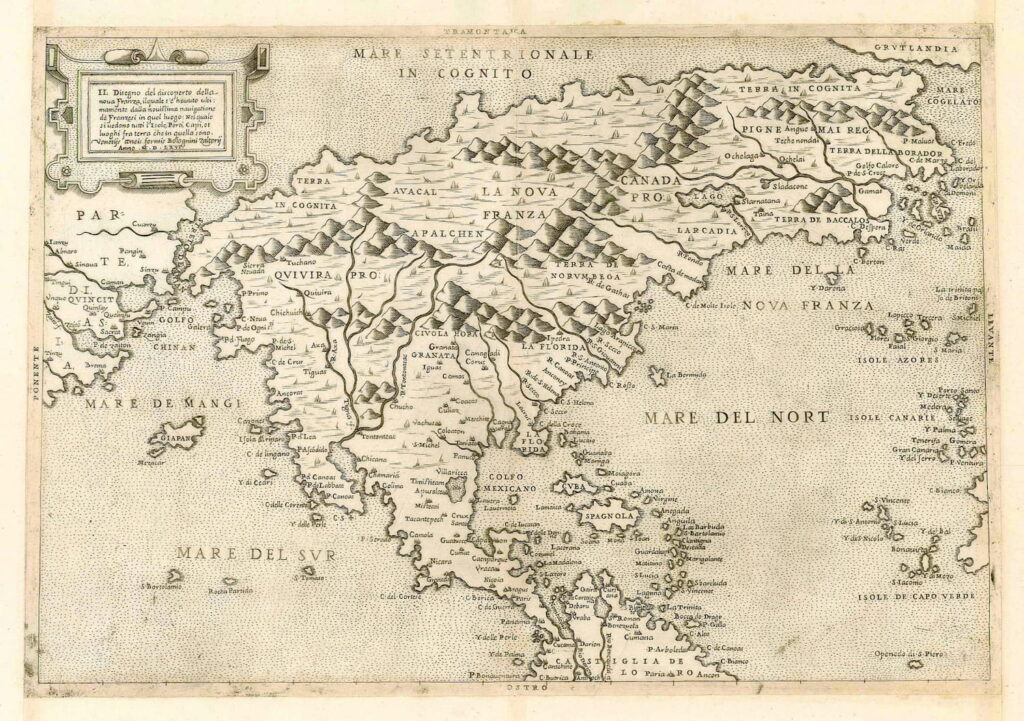
Terra Incognita in History
The most significant region of Terra incognita was Terra Australis (incognita), a large landmass in the Southern Hemisphere postulated in ancient and medieval times as a counterbalance to the northern continents. The continent of Australia, discovered around 1600 by sailors, received its name from this concept.
Other parts turned out to be nonexistent or were actually pack ice or coastal sections of Antarctica.
In 1883, Clements Markham referred to the unknown territory as the “blank of the maps,” a term later translated into other languages such as German as “white spots”. With the increasing exploration and mapping of the Earth, the term has lost its relevance and is now predominantly used in a historical or metaphorical sense. It is overlooked that even today, significant portions of the Earth remain virtually unexplored.
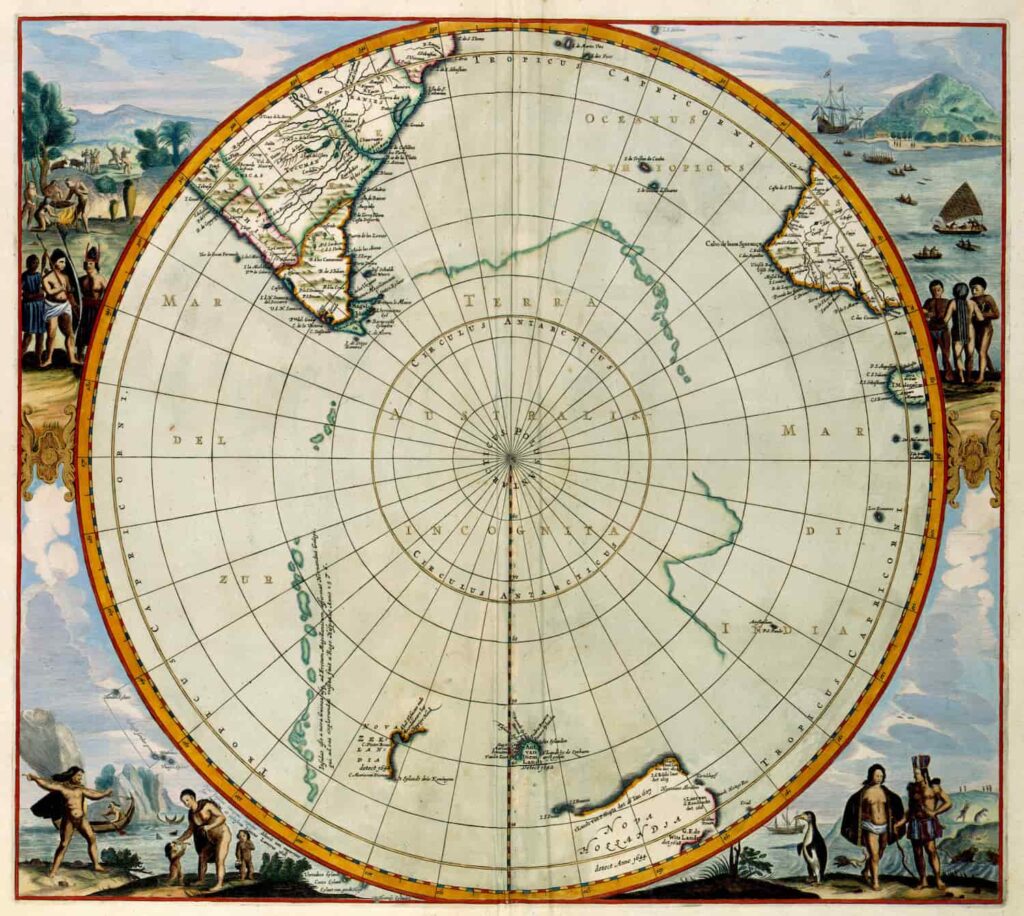
Retreat of Unknown Lands
Since 1830, explorations have multiplied, and colonial expansion has facilitated the discovery of the last unexplored territories. Explorers, including David Livingstone, explored Central and East Africa and the Congo Basin. With the development of geographical societies in the 19th century, the mention of terra incognita gradually disappeared from maps.
In modern times, it seems that there are no longer truly unexplored territories by humans, except for numerous underground and underwater areas. Consequently, the term is now used more metaphorically. For instance, a subject can be terra incognita for an individual if it exceeds the scope of their knowledge.
Origins of the Expression Terra Incognita
This inscription appeared on geographical maps, especially on world maps, to designate lands located beyond the areas known to Europeans. For a long time, the interior of Africa (particularly the Congo Basin) was considered terra incognita, as were the spaces south of New Zealand (terra australis incognita, “unknown southern land”).
Cartographers harbored numerous myths about these territories, which they transcribed onto their maps.
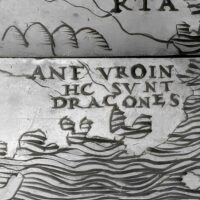
For instance, they would write on these areas: HIC SVNT DRACONES (“here, there be dragons” in Latin) or simply depict fantastical creatures, such as giant sea serpents.
Terra Incognita Today
Metaphorically, it still represents uncharted or unexplored areas of reality, about which one may have knowledge or suspicions but cannot yet define concretely.
Unexplored areas at the beginning of the 21st century include:
- The ocean floor, particularly the Tamu Massif east of Japan, identified in 2009 as the largest volcano on Earth.
- Land structures beneath the ice of Antarctica and Greenland.
- Some Tepui mountains in Venezuela.
- Certain 6000-meter peaks in the eastern Tibetan Himalayas.
- The Wakhjir Pass corridor in the Pamir Mountains of Afghanistan.
- Some regions of the Sahara.
- Remote rainforests in the Amazon Basin.
- Parts of the Andes.
- Mountains in Papua New Guinea.
Examples of discoveries/explorations since the year 2000 include:
- Hodgson Lake (Antarctica, 2000).
- Muchimuk Cave System (Venezuela, 2002).
- Gocta Waterfall (Peru, 2002).
- Somoto Canyon (Nicaragua, 2004).
- Erdi-Ma Plateau (Chad, 2005).
- Sơn Đoòng Cave (Vietnam, 2009).
- World’s Largest Peat Bog, Cuvette Centrale (Democratic Republic of Congo, 2012).
- Taurida Cave (Russian-annexed Crimea, 2018).
- Nazca Cat Drawing (Peru, 2020).