When Napoleon Bonaparte seized control of the French government in November 1799, the map of continental Europe looked much as it had during the late Middle Ages: a fragmented patchwork of feudal principalities, ecclesiastical bishoprics, free imperial cities, and multi ethnic dynastic empires where ordinary people owed allegiance to a local lord or monarch rather than to a shared national identity. By the time Napoleon boarded a British warship into exile sixteen years later in 1815, his armies, legal codes, and administrative consolidations had permanently shattered the feudal order. Both through deliberate institutional reform and through the fierce patriotic resistance his occupations provoked, Napoleon became the accidental architect of the modern European nation state.
Shattering the Holy Roman Empire and Consolidating Germany
Nowhere was Napoleon’s cartographic transformation more dramatic than in the German speaking lands of Central Europe. For nearly a thousand years, Germany had existed as the Holy Roman Empire, a loose, convoluted structure comprising over three hundred independent territories, ranging from powerful kingdoms like Prussia and Bavaria down to tiny imperial knights’ estates covering just a few acres of farmland, each maintaining its own tolls, weights, currencies, and feudal courts.
Through the German Mediatization of 1803 and the creation of the Confederation of the Rhine in 1806 following his crushing victory at Austerlitz, Napoleon swept away this medieval mosaic with the stroke of a pen. Dissolving the Holy Roman Empire entirely, he abolished over one hundred tiny ecclesiastical states and free cities, merging them into thirty nine consolidated, medium sized states such as Baden, Wurttemberg, and Saxony. For the first time in history, Germans experienced streamlined borders and centralized state administration. Simultaneously, the humiliation of French military occupation sparked a profound cultural awakening among German thinkers like Johann Gottlieb Fichte, students, and poets, who began demanding that these newly consolidated states unite into a single German fatherland—setting the direct trajectory toward the unification of Germany in 1871.
Awakening the Risorgimento in the Italian Peninsula
Before Napoleon’s famous Italian Campaign of 1796, the Italian peninsula had been divided for fourteen centuries since the fall of Rome, partitioned among Austrian Habsburgs, Spanish Bourbons, the Papal States, and oligarchic merchant republics like Venice and Genoa. Marching across the Alps, the young Corsican general—himself of Italian ancestry—toppled these ancient regimes and reorganized the peninsula into two major administrative blocks: the Kingdom of Italy in the north, with himself crowned with the Iron Crown of Lombardy in Milan, and the Kingdom of Naples in the south.
Under Napoleonic rule, customs barriers between Italian cities were torn down, a unified currency and metric system were introduced, mountain passes were paved, and young men from Milan, Venice, Bologna, and Rome served side by side in the same military regiments under a green, white, and red tricolor flag. Even after the Congress of Vienna restored the old Austrian and Papal rulers in 1815, a generation of Italian administrators, lawyers, and officers had tasted the efficiency of a unified Italian state, lighting the fuse of the Risorgimento that culminated in the creation of the modern Kingdom of Italy five decades later.
The Napoleonic Code: Turning Feudal Subjects Into Citizens
Beyond redrawing physical borders, Napoleon exported a revolutionary legal framework that fundamentally changed how Europeans viewed their relationship to the state. Wherever the Grande Armee marched—from Madrid and Warsaw to Amsterdam and Naples—Napoleon implemented the Code Civil of 1804, universally known as the Napoleonic Code.
Before the Code, laws varied from village to village, and noblemen and clergy were judged in separate, privileged courts while peasants remained bound by feudal dues and guild restrictions. The Napoleonic Code established one simple, revolutionary principle: every citizen stood equal before a single, uniform written law, regardless of birth, aristocratic title, or religion. By abolishing serfdom, ending feudal land privileges, establishing civil marriage, opening government jobs to merit and talent rather than noble lineage, and emancipating Jewish communities from medieval ghettos across Europe, the Code created a unified civic identity. People were no longer subjects of a duke; they were equal citizens of a state.
The Duchy of Warsaw and the Revival of Polish Statehood
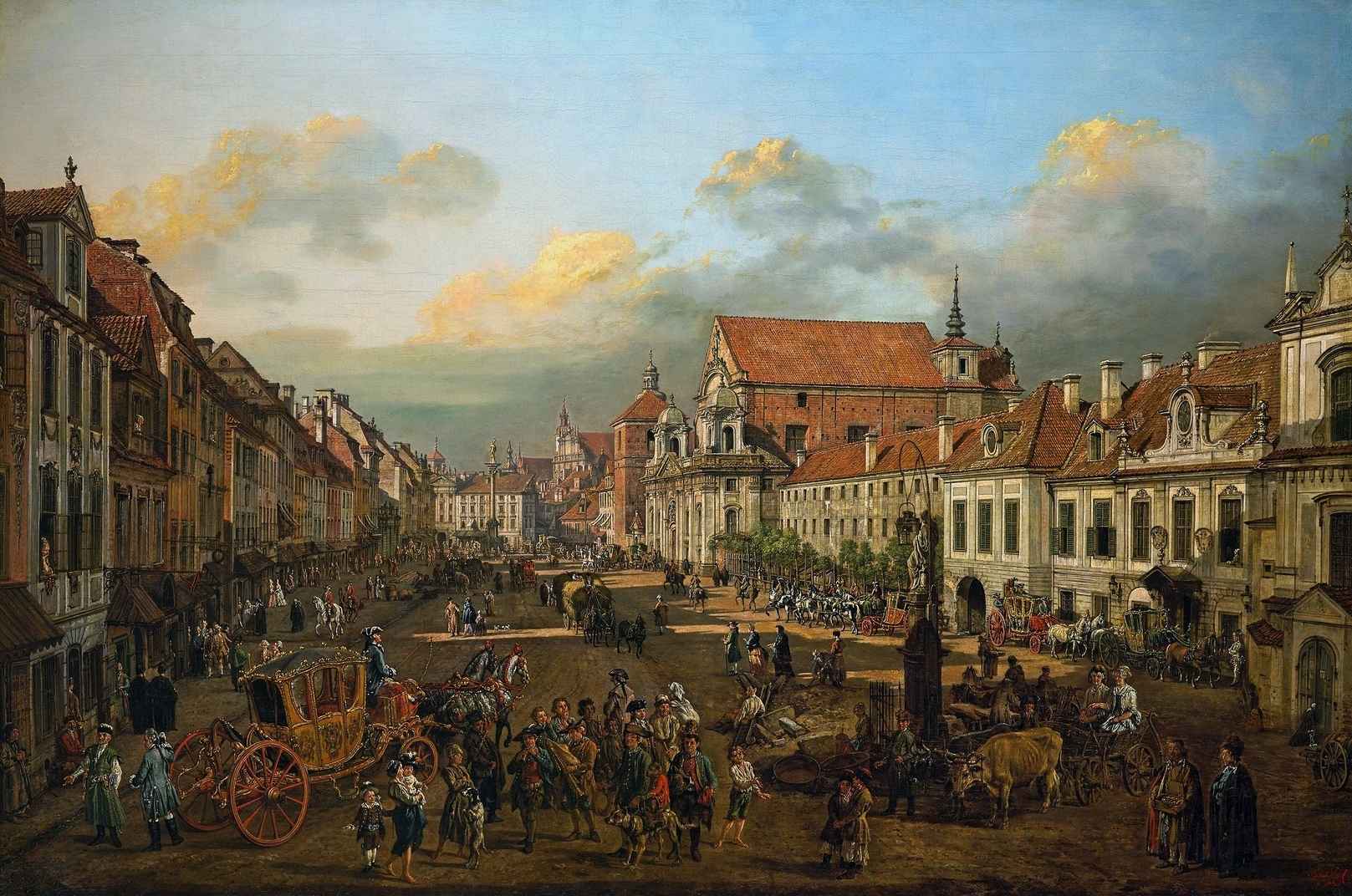
In Eastern Europe, Napoleon revived a nation that had been completely erased from the map. Between 1772 and 1795, the neighboring empires of Russia, Prussia, and Austria had partitioned the Polish Lithuanian Commonwealth out of existence. Thousands of Polish patriots fled to France to form the Polish Legions under General Jan Henryk Dabrowski, fighting alongside Napoleon in Italy under the famous marching song Mazurek Dabrowskiego, whose opening lyrics declared that Poland had not yet perished so long as they lived—a song that remains Poland’s national anthem today.

In 1807, after defeating Prussia and Russia at Friedland, Napoleon signed the Treaties of Tilsit and carved out the Duchy of Warsaw from Prussian held Polish lands. Equipped with a modern constitution, the Napoleonic Code, the abolition of peasant serfdom, and a proud Polish army commanded by Prince Jozef Poniatowski, the Duchy of Warsaw kept the institutional flame of Polish sovereignty alive throughout the nineteenth century.
Nationalism by Resistance in Spain, Russia, and Illyria
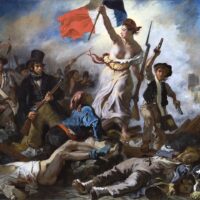
Paradoxically, Napoleon’s most powerful contribution to European nationalism came when Europeans turned the ideals of the French Revolution back against him. When Napoleon deposed the Spanish monarchy in 1808 and placed his brother Joseph on the throne in Madrid, ordinary Spanish citizens rose up in the Dos de Mayo rebellion and waged years of relentless guerrilla warfare—coining the very word “guerrilla” (little war)—while Spanish delegates met at Cadiz in 1812 to draft Spain’s first modern liberal constitution in the name of the sovereign Spanish nation.
Even in the Balkans, Napoleon’s creation of the Illyrian Provinces along the Adriatic coast between 1809 and 1813 introduced Slovenian and Croatian language schools where local dialects were elevated to official administrative status, planting the early seeds of South Slavic national consciousness. Speaking from exile on the island of Saint Helena before his death in 1821, Napoleon himself predicted that the national movements he had set in motion could never be reversed by the old kings of Europe, leaving behind a continent defined by the modern nation state.