Panda Ant (Euspinolia militaris)
The charming creatures in the picture above are called panda ants due to their unique coloring. However, these insects are neither bears nor ants—they are a type of Chilean wasp.
Male wasps have wings to fly and quickly mate with potential partners. During courtship, they lift the female into the air—a kind of mating dance. The females, however, are wingless and crawl on the ground. After mating, they find the larvae of other insects and inject them with their stinger, which doubles as an ovipositor.
These parasitic wasps lay their eggs directly inside the bodies of their victims so that their offspring can devour the unfortunate hosts from the inside.
The wasp’s sting—or more precisely, its stinger’s puncture—is incredibly painful. Their bright coloring serves as a warning to predators that it’s better not to mess with them.
Hoverfly
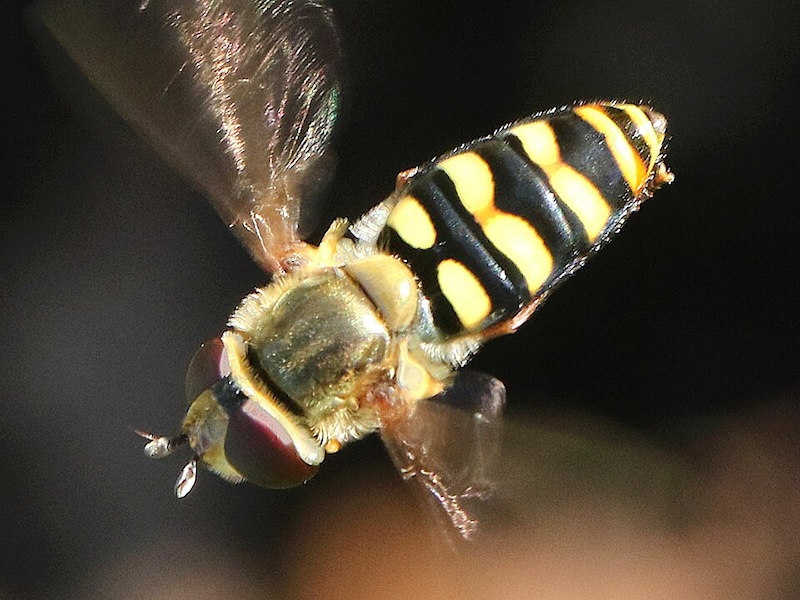
These creatures are also known as syrphid flies. They belong to a large family of flies related to common household pests. However, they are much more pleasant to look at than scavengers and primarily feed on pollen and nectar.
Like most ordinary flies, hoverflies are harmless and defenseless. But they have found a way to protect themselves—by developing striped markings. After all, no predator in its right mind would want to anger a bee, let alone a large bumblebee with its sharp stingers and painful venom. This coloring protects hoverflies from potential threats.
Alligator Snapping Turtle (Macrochelys temminckii)
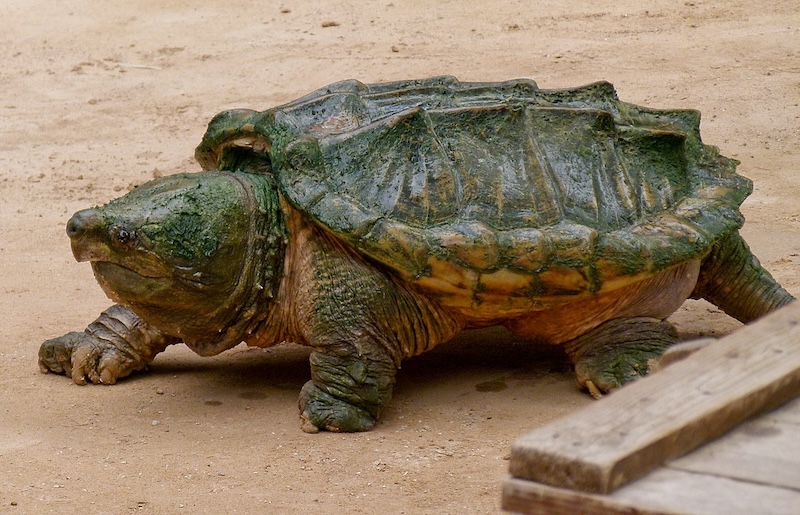
Also known as the alligator turtle, it got its name due to its extremely powerful jaws and ridges on its shell, resembling an alligator’s back. It inhabits the southeastern United States, mainly in the Mississippi River basin.
This turtle is a skilled fisher. Instead of simply lying in ambush during a hunt, it actively lures prey with its tongue. The tip of its tongue is long, narrow, and resembles a pink worm. The turtle buries itself in the ground at the bottom and sticks out its tongue. When a fish comes closer, the reptile easily bites it in half with its jaws.
An adult turtle can weigh over 100 kg and reach a length of 80 centimeters. Due to its powerful bite, it can sever fingers, so it’s best to avoid putting them near this creature’s mouth.
Snake-Mimic Caterpillar
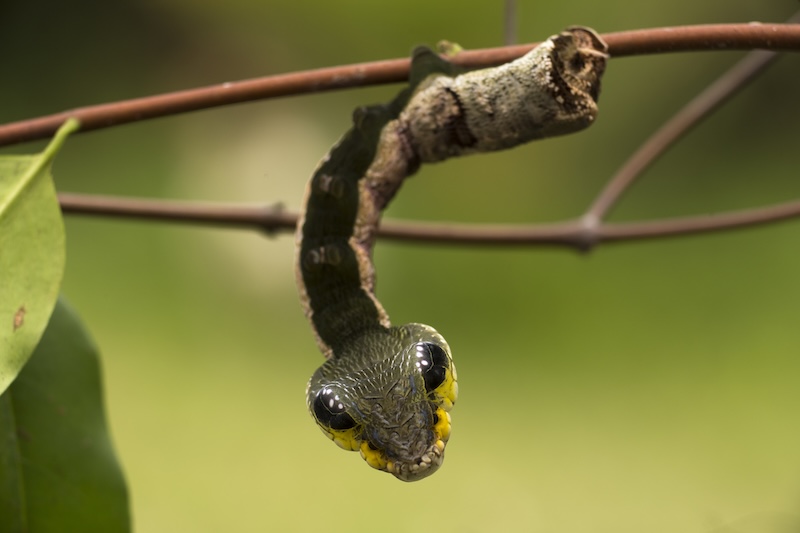
There is a moth with the scientific name Hemeroplanes triptolemus. In its adult form, it doesn’t have an impressive appearance—just a regular gray butterfly resembling a large moth.
However, in its caterpillar form, this insect is quite memorable. It has developed an unusual defense mechanism—mimicking a snake. The rear part of the caterpillar closely resembles the head of a viper. When it feels threatened, it inflates and raises this part, imitating a snake’s head.
Any bird considering the larva as prey will immediately change course in panic and fly away, as no bird in its right mind would want to confront a viper.
Another butterfly species, Papilio troilus, also knows how to disguise itself as a snake when young. But the caterpillar only imitates a viper after growing and turning green. When the larva is young and brownish, it mimics bird droppings.
Naturally, birds avoid such an unappetizing snack.
Alligator Bug (Fulgora laternaria)
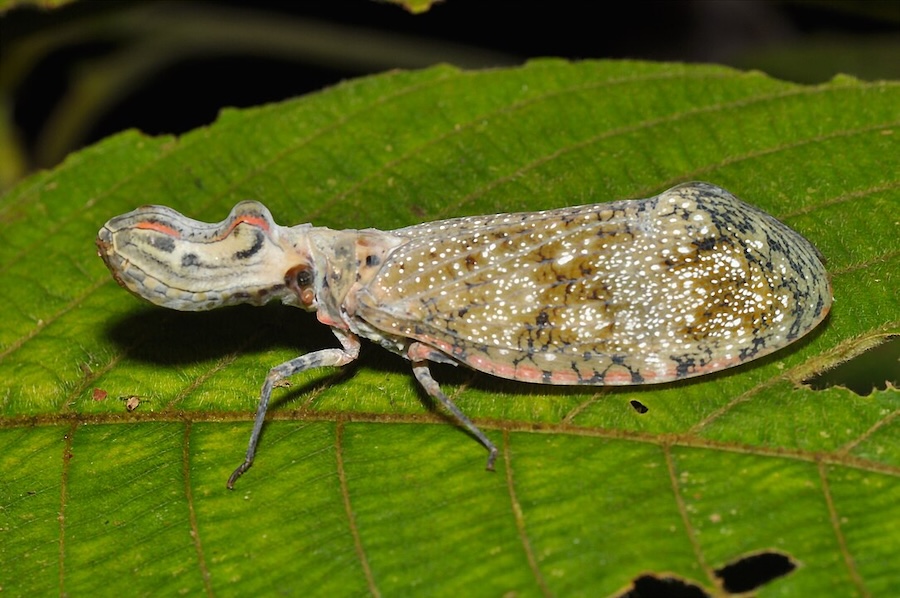
Another small insect that tries to resemble a reptile is the Surinam toad bug, also known as the alligator bug. Its front part resembles a lizard’s head.
When the bug feels threatened, it inflates its head and opens its wings, making birds think they are facing a reptile rather than an insect. The bird decides not to bother and leaves it alone.
Interestingly, the bug’s name came about by mistake. Naturalist Maria Sibylla Merian mistakenly thought that its head glows at night, and taxonomist Carl Linnaeus took this assertion at face value and named the insect a lanternfly.
Ant-Mimicking Spider (Myrmarachne)
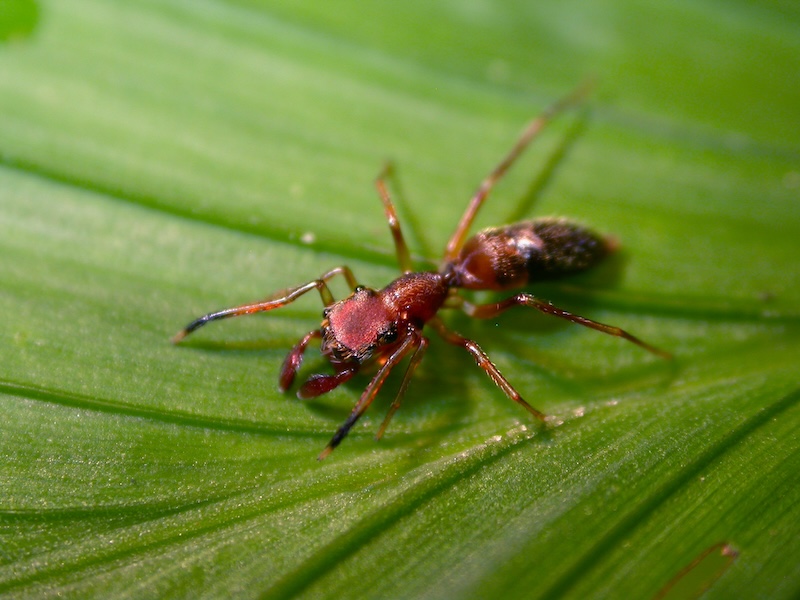
Take a look at this creature. It looks like an ant, doesn’t it? That’s because it wants everyone to think so. In reality, this is not an insect at all but a spider of the species Myrmarachne formicaria. Its method of camouflage is called myrmecomorphy.
In fact, there are more than 300 species of spiders that mimic this appearance.
Why do they do it? Some spiders do it to deter predators. Many insects avoid ants because these fierce little creatures can swarm and overwhelm anything that tries to hunt them. So, various spiders, as well as some bugs, wasps, and flies, choose to imitate ants—making everyone believe they are just as tough and dangerous to mess with.
Other spiders do this to infiltrate ant nests and feed on their supplies and larvae. They then calmly walk out through the main entrance past the guards, mimicking the locals and pretending they belong there.
There’s a catch, though: ants can recognize each other not just by appearance but by scent. Some clever spiders have found a solution. They carry a dead ant from the colony in their jaws, walking around the nest as if they are taking a fallen comrade to the cemetery. It’s like a scene from a stealthy video game in the insect world.
False Cleanerfish (Aspidontus taeniatus)
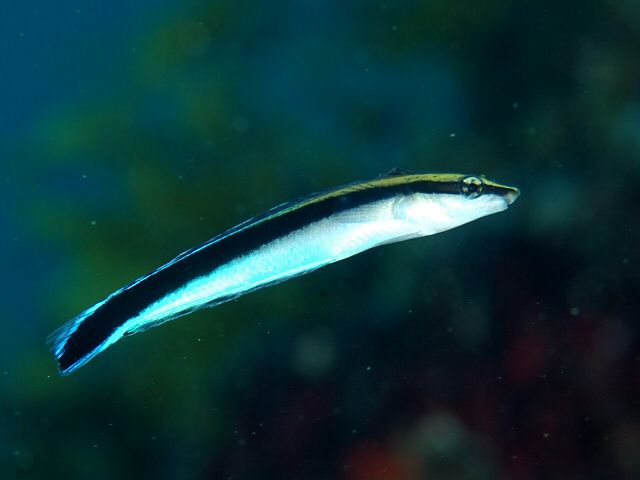
There are fish known as combtooth blennies, and one of their varieties is called the false cleaner fish. These scaly rascals are unmatched in treachery and deceit.
Many large marine creatures like rays, parrotfish, and pufferfish live in symbiosis with a fish called a wrasse. They allow the wrasse to clean algae and parasites off their bodies. As a result, the cleaner fish gets food, while the host fish benefits from improved health and quality of life.
After all, it’s quite unpleasant to have a bloodsucking arthropod clinging to your belly when you’re unable to remove it because you have fins.
Combtooth blennies pretend to be cleaner wrasses by imitating their behavior and appearance. They approach larger fish, and the unsuspecting host lets them in without a second thought. The blenny then bites a chunk of flesh out of its trusting victim and silently swims away as if nothing had happened.
Margay (Leopardus wiedii)
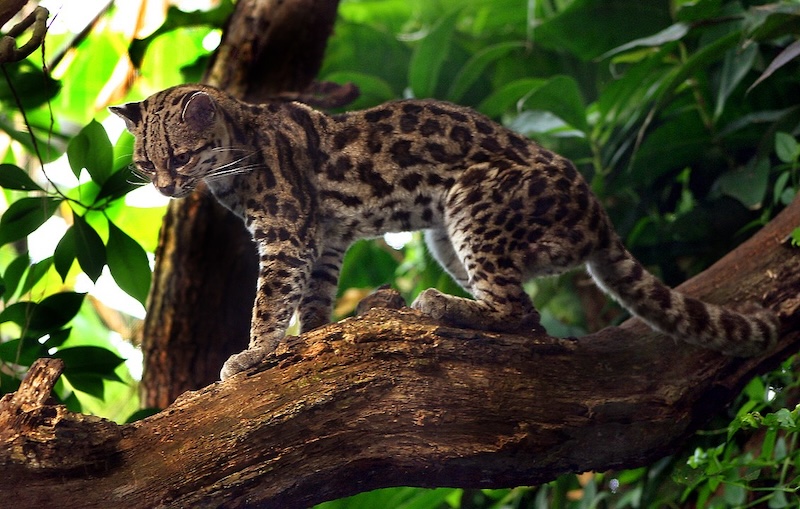
You might wonder, what could this creature pretend to be? It’s clearly a cat; no one could be fooled by that! And you’re right: the margay, or the long-tailed South American cat, doesn’t attempt to mimic someone’s appearance. It imitates voices.
The margay climbs a tree and starts screaming, imitating the cries of a baby pied tamarin—a type of monkey. The male tamarin, who cares for the offspring in this species, rushes to the branch to check if it’s his baby crying. The margay pounces on the unfortunate monkey, kills it, and eats it. That’s its hunting method.
By the way, this predator can also jump almost 3.7 meters (12 feet) upward. It’s not like your lazy house cat, which, after falling out of a window, can’t figure out how to get back inside.