Following the discovery of the nucleus in the atom in 1911, it was found that when bombarded with particles from radioactive substances, the atomic nuclei can split and ultimately create a tremendous quantity of energy. Otto Hahn (1879–1968) and Lise Meitner (1878–1968) discovered the splitting of the uranium nucleus. The heaviest nuclei are those of uranium, and their isotopes were divided by neutrons.
Splitting an atom
In the process called “fission,” additional neutrons are produced, and these neutrons cause the fission to continue in a chain reaction. In 1942, a research team led by Enrico Fermi (1901–1954) succeeded in carrying out a chain reaction in the world’s first nuclear reactor. Three years later, the same chain reaction was used in the nuclear bombs that destroyed Hiroshima and Nagasaki in Japan.
Chain reaction
The energy source in a nuclear reaction or explosion is a chain reaction. A uranium or plutonium nucleus is split by fission, new neutrons emerge, and these neutrons cause new nucleus fissions. As a result of the energy and radiation of the divided parts, a huge amount of heat is released. This heat is used in reactors to generate electricity in a controlled manner. The heat generated by the explosion is much more severe than this.
- Stray neutrons: Atoms bombarded with radiation give off neutrons. Sometimes neutrons can also be released from decaying uranium nuclei, but these neutrons very rarely react with uranium nuclei to cause a chain reaction. Most nuclear reactions use a highly radioactive but rare isotope of uranium, uranium-235.
- Nuclear fission: When a neutron hits another uranium nucleus, the nucleus splits in two, almost evenly. In addition to high-energy radiation, a few neutrons are also released. These neutrons can cause other nuclei to split in a chain reaction. Graphite or uranium and heavy water are used to slow down these neutrons.
Splitting the atom in the family
In 1917, Lise Meitner and Otto Hahn discovered a new element in uranium ores, called protactinium. Meitner and his nephew Otto Frisch (1904-1979) carried out the uranium fission experiment in 1939. Otto Hahn worked on the breakdown of neutrons and uranium nuclei. By-products of this disintegration process included barium nuclei, which weighed half as much as uranium nuclei. This is one family to remember when it comes to breaking down the atom.

A richer fuel: U-235
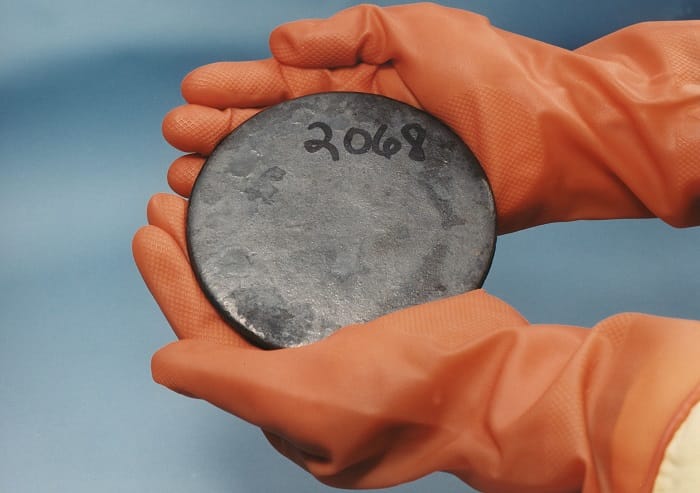
Fuel rods consist of parts of a uranium compound called uranium dioxide, which contains a high content of uranium-235. These rods are used in the Magnox reactor and the British Advanced Gas-Cooled Reactor-AGR.
Unstable uranium: uranium-238 (U-238)
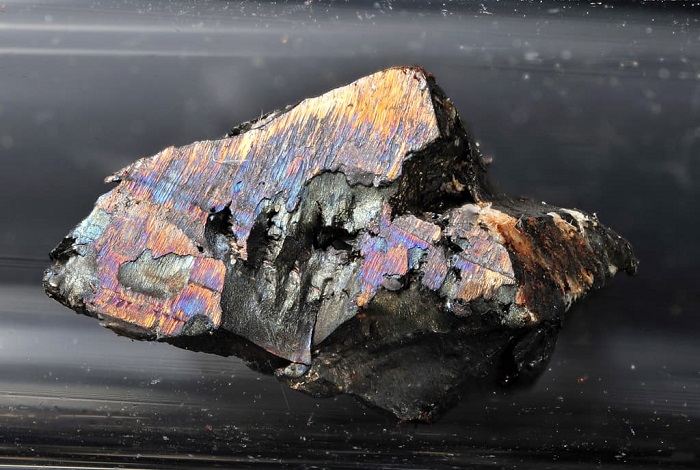
The main isotope of uranium is uranium-238 (U-238). Its nucleus contains a total of 238 particles, including 92 protons and 146 neutrons. Neutrons prevent the protons in the nucleus from pushing each other due to the positive charges. However, an unstable U-238 nucleus spontaneously decays, emits an atomic particle, and eventually turns into a thorium nucleus. The thorium core is also unstable. Therefore, with this chain decay process, it becomes different particles and the process continues until a lead nucleus is formed.
Other uranium isotopes also go through similar chain decay processes and turn into a different isotope of lead. This feature allows the rocks containing uranium to be discovered by looking at their radioactivity. Uranium can also break down through fission, which can cause a chain reaction. Special conditions must be met for such a chain reaction, and a sufficient amount of relatively pure uranium should be used.
Warnings about the atomic bomb
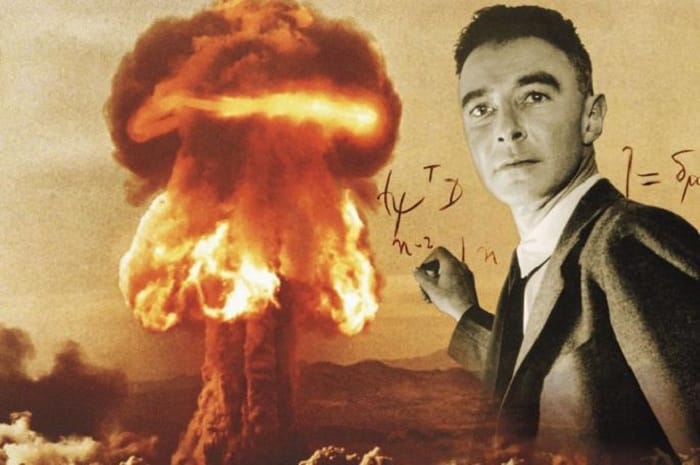
40 years before the first nuclear explosion, in 1905, Albert Einstein (1879–1955) showed in the Theory of Special Relativity that energy and mass are equivalent and can convert into each other. In 1939, he warned American President Franklin Roosevelt that the uranium chain reaction could be dangerously used to make a very powerful bomb.

Robert Oppenheimer (1904-1967) joined the US atomic bomb project in 1942 and later became the head of the lab that would make the first nuclear bomb. In 1954, after his dismissal for security reasons, he put an end to his atom studies.
Cherenkov Radiation
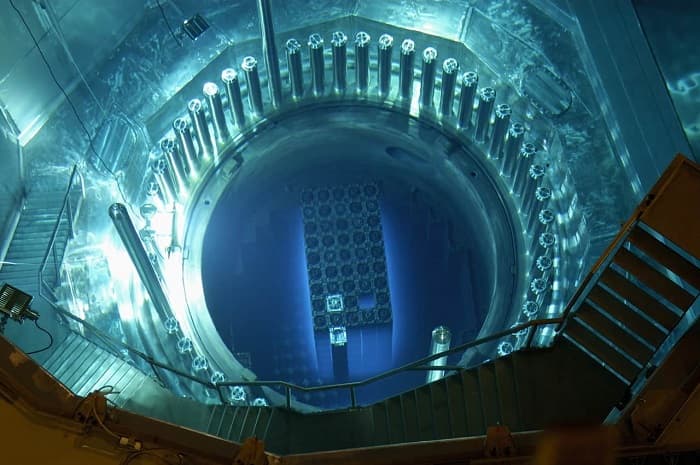
This magical blue glow in the heart of the nuclear reactor is caused by light-emitting electrons as they pass through the medium. In such reactors, the chain reaction is controlled by rods containing neutron-absorbing materials such as cadmium. Severe heat in the reactor’s core is removed with the help of gas, liquid metal, or high-pressure water.