Muspelheim, also known as Muspell or Muspel, is a realm in Norse mythology associated with fire, heat, and the primordial forces of creation. It is one of the Nine Worlds and is often mentioned in the Prose Edda and Poetic Edda, two primary sources for Norse mythology.
Muspelheim: Key Takeaways
- Muspelheim is often described as a realm of intense heat and flames. It is ruled by the fire giant Surtr, a powerful being associated with destruction and chaos.
- Muspelheim is considered one of the oldest realms in Norse cosmology. It is said to have originated at the same time as Niflheim, the icy realm, and the void known as Ginnungagap.
- Surtr is a prominent figure in Muspelheim and is foretold to play a significant role in the events of Ragnarok, the end of the world in Norse mythology. It is said that Surtr will lead the forces of Muspelheim to battle against the gods.
- According to some Norse myths, Muspelheim, along with Niflheim, played a role in the creation of the world. The meeting of fire and ice from Muspelheim and Niflheim respectively gave rise to the being Ymir and the creation of the cosmos.buy symbicort online https://buynoprescriptionrxxonline.com/buy-symbicort.html no prescription pharmacy
- In addition to Surtr, Muspelheim is said to be inhabited by various fire giants, spirits, and supernatural beings associated with heat and flame.
The Origin of Muspelheim
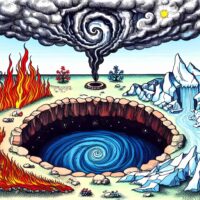
According to the Prose Edda, written by the Icelandic scholar Snorri Sturluson in the 13th century, Muspelheim was one of the two primordial worlds that existed before the creation of the universe. The other world was Niflheim, the land of ice and darkness, located in the north. Between them was a vast emptiness called Ginnungagap, where nothing lived.
In the beginning, sparks and flames from Muspelheim flew across Ginnungagap and melted the ice from Niflheim, creating water droplets. From these droplets emerged the first living being, the giant Ymir, and the cow Auðumbla (Audhumla), who nourished him with her milk. Auðumbla licked the ice and revealed another being, Búri, the ancestor of the gods. Búri had a son named Borr (Bor), who married Bestla, the daughter of a frost giant. They had three sons: Odin, Vili, and Ve, who became the first gods.
The gods killed Ymir and used his body to create the world. His flesh became the earth, his blood became the sea, his bones became the mountains, his teeth became the rocks, his hair became the plants, and his skull became the sky. The gods also used the sparks from Muspelheim to create the heavenly bodies, such as the sun, the moon, and the stars.
The Inhabitants of Muspelheim
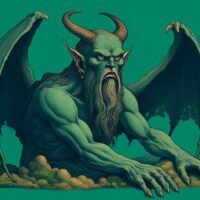
Muspelheim is the domain of the fire giants, also known as the sons of Muspell. They are fierce and destructive beings who oppose the gods and the other races of the nine worlds. They are ruled by Surtr, the black one, who wields a sword that shines brighter than the sun.
Surtr is the oldest and most powerful of the fire giants, and he guards the border of Muspelheim against any intruders.
Another notable inhabitant of Muspelheim is Logi (Hálogi), the personification of fire. He is the brother of Kári, the god of the wind, and Aegir, the god of the sea. He once competed with Loki, the trickster god, in a contest of eating. Logi devoured not only the meat but also the bones, the plates, and the table, proving his superiority over Loki.
Muspelheim is primarily inhabited by the fire giants, and the most notable figure associated with this realm is Surt, a powerful and fire-wielding giant.
The Role of Muspelheim in Ragnarok
Muspelheim plays a crucial role in Ragnarok, the final battle between the gods and the giants, and the end of the world as we know it. According to the Poetic Edda, a collection of Old Norse poems from the 10th to 13th centuries, Muspelheim will be the source of the fire that will consume everything.
Before Ragnarok, a series of disasters will occur, such as wars, famines, plagues, and natural calamities. The sun and the moon will be devoured by the wolves Sköll and Hati, and the stars will disappear from the sky. The earth will shake and the mountains will crumble, releasing the monsters that were imprisoned by the gods, such as the Midgard serpent (Jörmungandr), the Fenrir wolf, and the Hel goddess. The rainbow bridge, Bifrost, that connects Asgard, the home of the gods, and Midgard, the home of the humans, will break, and the forces of chaos will invade the world.
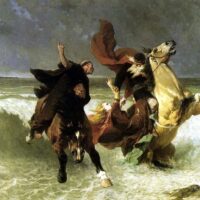
Among them will be the army of the fire giants, led by Surtr. They will march across Bifrost and reach the plain of Vígríðr, where the final battle will take place. Surtr will confront Freyr, the god of fertility and prosperity, who will have given away his magical sword to his servant Skírnir. Freyr will fight valiantly, but he will be slain by Surtr. Surtr will then swing his sword and set the world on fire, burning everything to ashes.
After the destruction, a new world will emerge from the ruins, and life will begin again. Some of the gods and the humans will survive the cataclysm, and they will live in harmony and peace. A new sun will rise, and a new generation of gods will rule. Muspelheim, along with the other eight worlds, will be reborn, and the cycle of creation and destruction will continue.
Attestations
Vǫluspá, the first poem of the Poetic Edda:
O'er the sea from the north | there sails a ship
With the people of Muspell, | at the helm stands Loki;
After the wolf | do wild men follow,
And with them the brother | of Byleist goes.
Source: The Poetic Edda
In the Gylfaginning, the first part of the Prose Edda by the Icelandic historian Snorri Sturluson, the following is repeatedly referenced:
Yet first was the world in the southern region, which was named Múspell; it is light and hot; that region is glowing and burning, and impassable to such as are outlanders and have not their holdings there.
Source: Gylfaginning
Popular Culture
In the video games God of War, players have the opportunity to explore the realm of Muspelheim. Within this realm, they can undertake various side missions, such as navigating through levels to reach the peak of the mountain and confronting one of the valkyries.
In the animated series Primal, the leader of the Vikings is brought to Muspelheim in the presence of Surtr, who bestows demonic powers upon him for seeking vengeance against the protagonists Spear and Fang.
In the Dawn of Ragnarök expansion for Ubisoft’s Assassin’s Creed Valhalla, Surtr and his massive oyster hordes from Muspelheim invade the dwarven realm of Svartalfheim, flooding much of the realm with magma pools and streams.
Muspelheim is a fascinating and important part of Norse mythology, representing the primal force of fire and the inevitable fate of the world. It is the origin of life, the source of destruction, the enemy of the gods and the ally of the new order. It is a world of contrasts and extremes, of beauty and horror, of light and darkness.