A significant number of individuals, especially those who have been exposed to prevalent media such as movies, television, and video games, harbor a misconception about archers. The portrayal of archers in such media as feeble and susceptible has led people to believe that historical archers were often defenseless in close combat due to their lightweight attire and lack of armor. Furthermore, the belief that archers wore light clothing to offset the strenuous act of pulling the bowstring, which demanded immense strength, reinforces this misconception. Additionally, people assume that archers avoided confrontations with heavily armored infantry altogether. Although these notions may appear logical, they are not truly accurate.
The Way Archers Are Positioned on the Battlefield
In the Middle Ages, archers would have had limited opportunities to shoot arrows if they were not positioned advantageously on the battlefield.
During a direct engagement, archers typically fired only three arrows before the enemy approached since the effective range of a bow was only about 650 to 1,000 feet (200 to 300 meters).
Given that all infantries could cover such a short distance swiftly, archers had to be strategic in their approach and often discharged only a handful of arrows before the enemy was upon them.
Did All Archers Really Wear Light Armor?
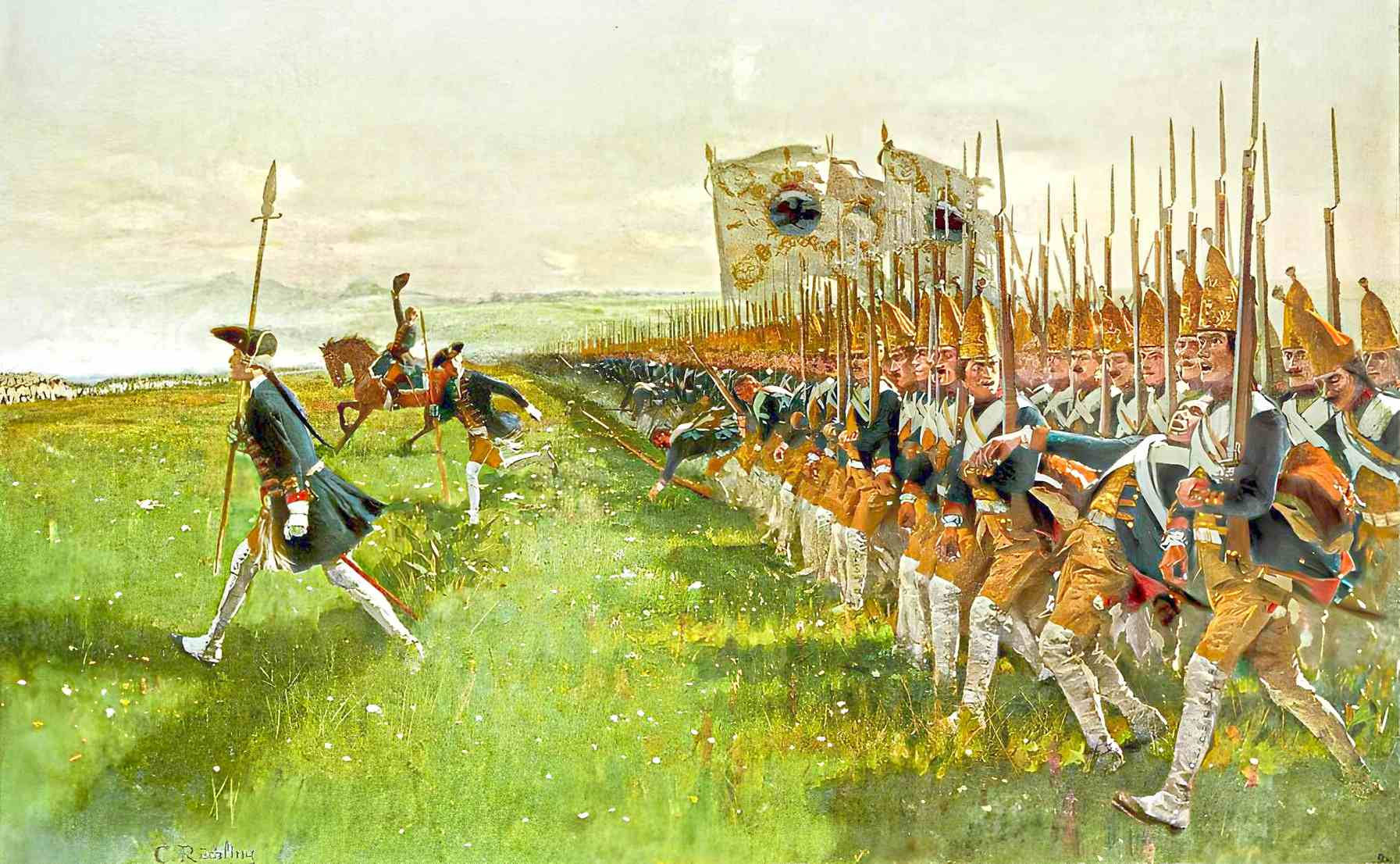
Despite only firing a few arrows in a battle, archers can still experience fatigue due to the physical demands of drawing the bowstring and maintaining a constant state of readiness. The notion that archers donned light clothing and no armor to enhance their arrow shooting ability does hold some truth, but it also varies depending on the specific battlefield conditions and tactics employed.
In Europe, for example, most archers did not wear plate armor on their upper bodies after the introduction of heavy armor, nor did they wear iron gauntlets, as plate armor was inconvenient for archers and interfered with their ability to exert force. However, other types of armor, such as chainmail, did not have this problem.
The European knights, being more inclined towards direct confrontation, donned full-body metallic armor on their horses. In contrast, the European archers prioritized their agility and were less prone to battle. Thus, they opted for lighter protection, typically fashioned from leather, and padded or quilted materials.
Exceptions
In contrast to the problem faced by European archers when wearing plate armor, medieval Chinese archers did not have this problem. Chinese armor was indeed crafted with archery in mind, as evidenced by the absence of iron gauntlets, which would have hindered an archer’s ability to shoot arrows smoothly.

This design decision highlights how the Chinese recognized the importance of archery on the battlefield and tailored their armor accordingly to accommodate it.
Archers Also Wore Heavy Armor
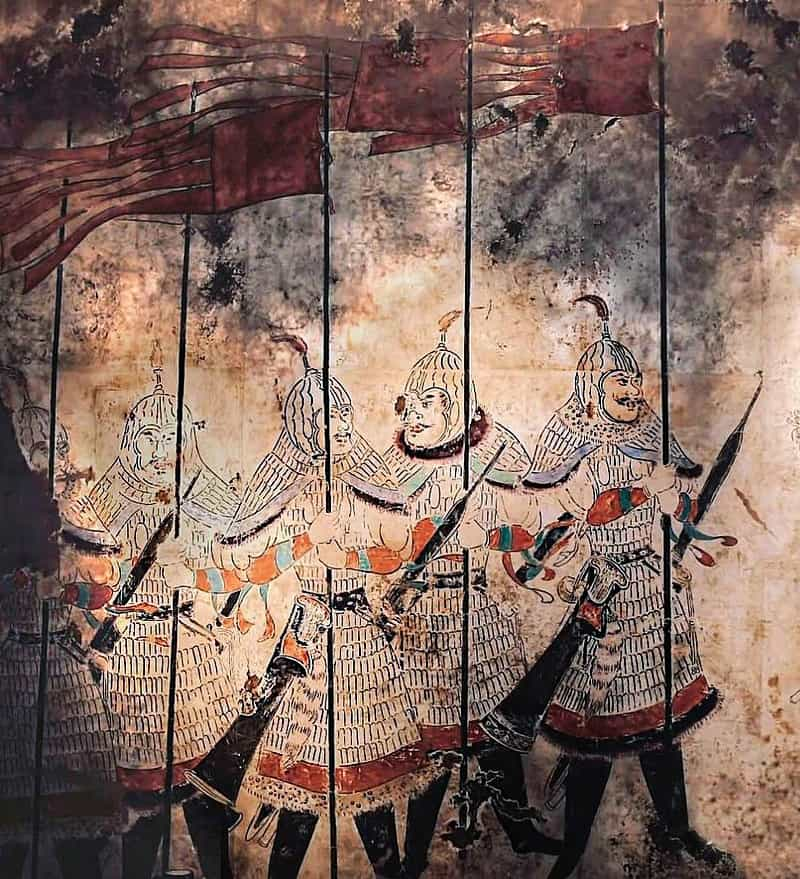
One can easily observe from surviving Chinese paintings, murals, and sculptures that their medieval archers were fully equipped with heavy armor and helmets.
For instance, even heavy cavalry in full body armor in the painting “Emperor Taizong’s Campaign Against the Eastern Turks” carried bows and arrows.
The Tang Dynasty military treatise “New Book of Tang” described the Tang army’s equipment and weapons, which included bows, various melee weapons, armor, and helmets, but only soldiers with garrison duties were not provided with armor:
“The Tang soldiers equipped themselves with a bow, thirty arrows, a Hu-Lu (a container for holding arrows), a horizontal knife, a whetstone, a quiver, a felt hat, a felt garment, and rattan shoes. They brought their own nine dou of wheat and two dou of rice. All their armor and weapons were stored in the warehouse. When they went out, they received them before departure. Only those who guarded the outpost were provided with bows, arrows, and horizontal knives.”
New Book of Tang, Volume 50, Military Provisions
The Chinese poet Du Fu also described the Tang army’s bow and arrow equipment in his poem “Ballad of the Army Carts“: Wagons rattling and banging, horses neighing and snorting, conscripts marching, each with bow and arrows at his hip.” This indicates that the Tang army did indeed provide each soldier with a bow, armored or not.
The record of military campaigns and “Taiwan Foreign Records” both provide clear descriptions of General Koxinga’s army structure and weapon equipment.
They mention that the elite Iron Man Army of Koxinga’s forces had not only sturdy iron helmets, armor, and other protective gear but that each soldier also carried a bow and a variety of weapons for both long-range and close combat.
In addition, they were equipped with fearsome horse-chopping broadswords that were carried by hand:
“In February, the bravest and strongest soldiers were selected as Koxinga’s personal troops, and they trained at the Yandwu Pavilion in Xiamen Port. They could each pull a bow up to 500 jin (550 lbs; 250 kg) and still move around freely on the training grounds. With the help of a skilled technician named Feng Chengshi, they wore thick iron helmets, armors, gauntlets, skirts, and shoes that arrows could not penetrate. They also wore iron masks that covered only the eyes, ears, nose, and mouth, decorated with colorful patterns resembling ghostly figures, and wielded horse-chopping broadswords.”
Taiwan Foreign Records, Volume Four.
Conclusion
Therefore, archers in history—especially medieval archers—were not completely defenseless in close combat. They had combat capabilities and could switch to using melee weapons such as swords and spears. However, their fighting ability depended on the quality of their armor and their organization, such as the tightness of their formation and whether they could form a battle formation when the enemy attacked.