Curious individuals who have recently discovered a passion for space sometimes wonder about the different terms used to refer to those who travel there. There is a plethora of words constructed around the suffix “-naut,” derived from the ancient Greek word ναύτης (navigator), but with distinct prefixes. These prefixes are generally related to nationality, but with a few subtle differences. Here’s a lexicon to clarify these terms.
Astronaut: The Generic Term
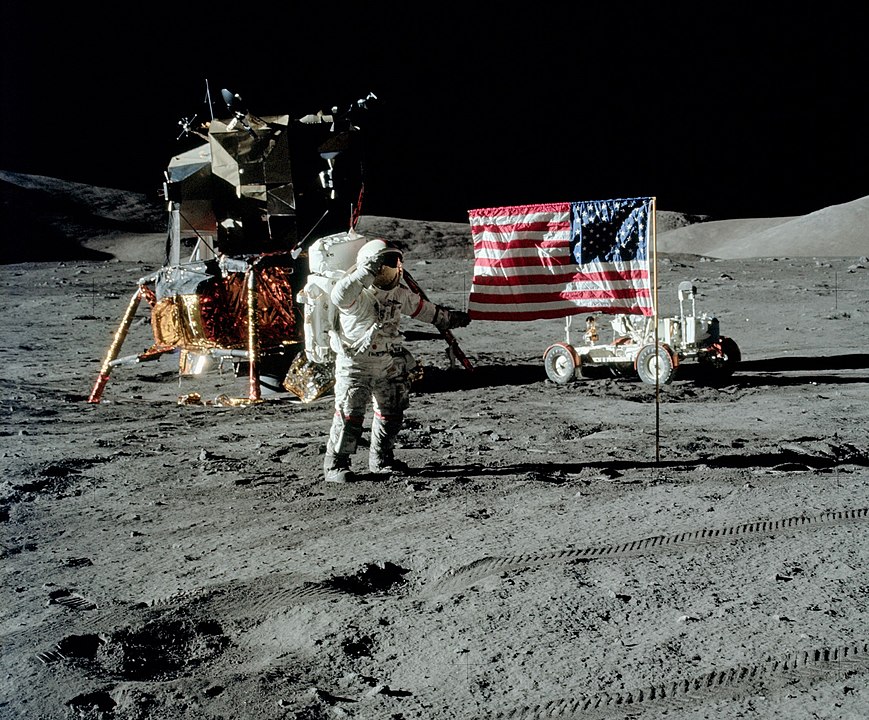
The most common term is undoubtedly “astronaut.” The prefix “astro-,” derived from the ancient Greek word ἄστρον, refers to stars. In principle, it refers to all humans who navigate among the stars and, by extension, in space, without any specific distinction.
Specifically, it is also a full-fledged professional title. The North American space agency, better known as NASA, officially awards it to anyone who joins its prestigious Astronaut Corps. This group currently comprises 41 astronauts based at the renowned Johnson Space Center in Texas.
Among the most well-known astronauts is the legendary Neil Armstrong, the first human to set foot on the Moon during the Apollo 11 mission in 1969. He is famously known for the phrase, “That’s one small step for a man, one giant leap for mankind.” He walked on the lunar surface alongside Edwin “Buzz” Aldrin, while Michael Collins remained in the command module.

Spationaut: A European Variant

The term “spationaut” is based on the Latin word “spatium,” which literally means “space.” It specifically refers to astronauts from Western Europe or, depending on the context, from France.
This is a rarer and mainly informal designation. Like its American counterpart, the European Space Agency also uses the term “astronaut” in its official documents. They are gathered in the European Astronaut Corps, established in Cologne in 1998 to unite European astronauts under one banner.
The European Astronaut Corps currently has six active members, including Italians Luca Parmitano and Samantha Cristoforetti, Germans Alexander Gerst and Mathias Maurer, Danish astronaut Andreas Mogensen, and notably, France’s own Thomas Pesquet. Thomas Pesquet holds the record as the European astronaut with the most time spent in space, totaling 396 days, 11 hours, and 34 minutes away from Earth.
Cosmonaut: A Russian Version Inherited from the Cold War
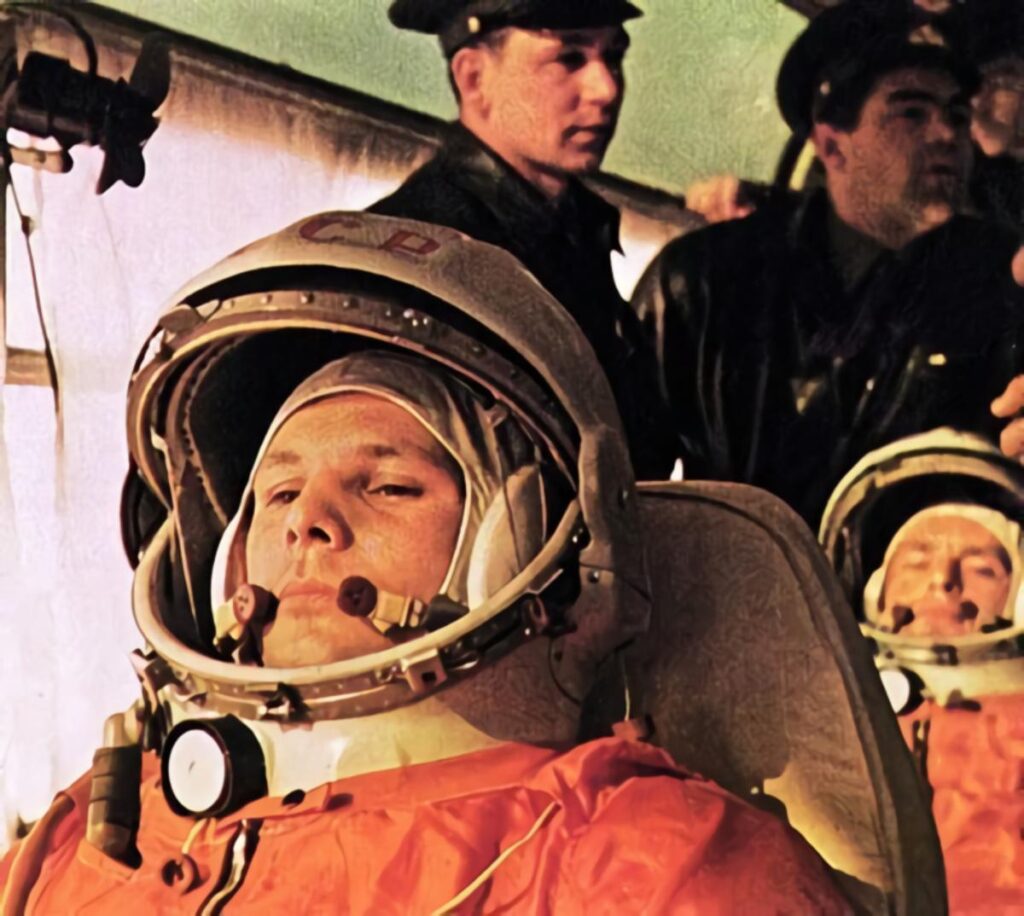
This term is a direct transliteration of “космонавт,” derived from the ancient Greek word κόσμος, meaning “universe.” It specifically refers to astronauts affiliated with the Russian space agency, now known as Roscosmos.
This word entered public vocabulary during the Cold War, which pitted the Western bloc, centered around the United States, against the Eastern bloc represented by the Soviet Union. From the perspective of the United States, it was a way to distinguish its own astronauts, true national heroes, from their Russian counterparts, whom Americans did not wish to hold in the same regard.
This distinction lost its pejorative character at the end of the Cold War. Thankfully, because it was the cosmonauts who achieved humanity’s first feats in space. In 1961, Yuri Gagarin became the first human to journey into space aboard the Vostok 1 mission.
Beyond this particularly famous example, a cohort of cosmonauts ventured into space before Americans even set foot there. Among them are Gherman Titov, who orbited space at the tender age of 25, Alexei Leonov, the first to conduct a spacewalk, and Valentina Tereshkova, the first woman to leave Earth.
Taikonaut: A Contested Chinese Variant
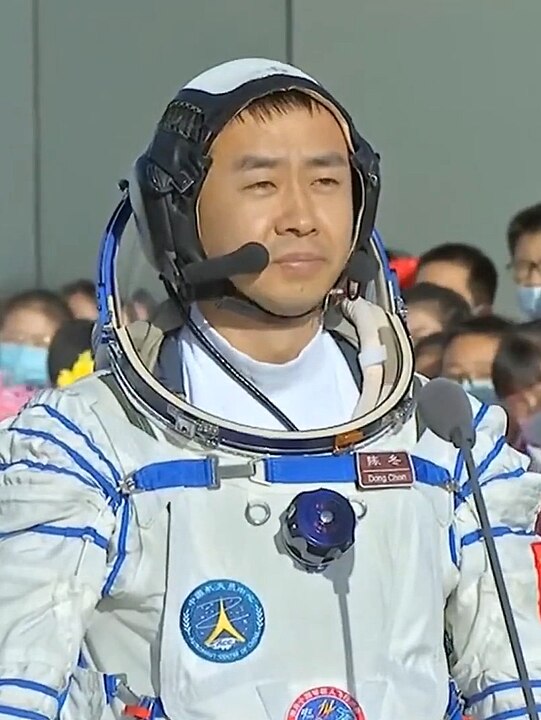
More recently, as more nations aspire to explore space, new terms have started to emerge, including “taikonauts,” who are astronauts affiliated with the Chinese space agency. The term is derived from the Mandarin “tàikōng” (太空), which literally means “space.
“
However, “taikonaut” is an informal term coined in the West and is not used in China. It is not well-received by some English-speaking Chinese audiences, as it is seen as drawing a parallel to the astronaut-cosmonaut divide during the Cold War, in a context where Chinese aerospace advances rapidly and diplomatic relations with the United States are tense.
Officially, Chinese astronauts are called “hángtiānyuán” (航天员), roughly translating to “celestial navigators.”
The most well-known among them is Yang Liwei, the first Chinese national in space. His mission was notably a solo flight, a rarity in the modern era. More recently, Jing Haipeng, Zhu Yangzhu, and Gui Haichao made history with their stay aboard the Tiangong, the new Chinese space station.
Vyomanaut
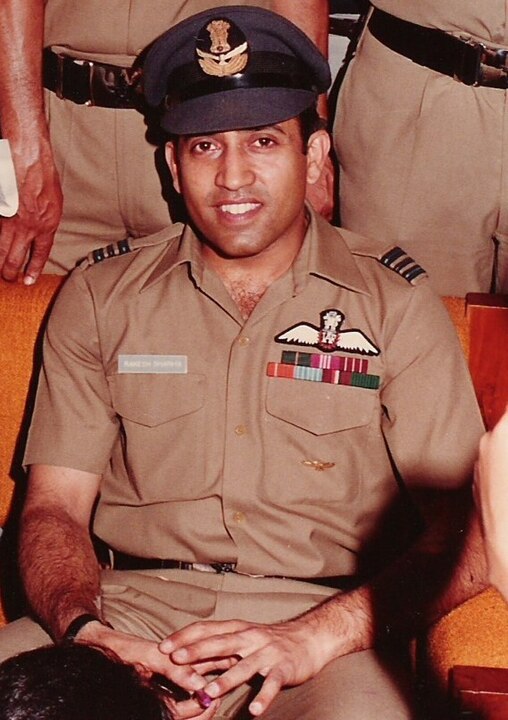
Vyomanauts are astronauts affiliated with ISRO, the Indian space agency. This name is derived from the Sanskrit व्योमन् (vyoman, “sky” or “space”).
It is perhaps the least known term on this list because there has been only one true Indian citizen astronaut.
This distinction belongs to Rakesh Sharma, who went to space in 1984. At the time, ISRO had just launched its first satellites into orbit, and the institution was far from sending humans into space. Sharma’s mission was made possible through a collaboration with the Soviet space program.
However, this might change soon. The number of vyomanautes is expected to quadruple with the Gaganyaan program, through which ISRO plans to send three astronauts into orbit in 2025.